The Thorny Issue of Population Growth
Life expectancy is up and poverty is down worldwide, even with our rapidly expanding global population. Are our fears of catastrophe overblown?
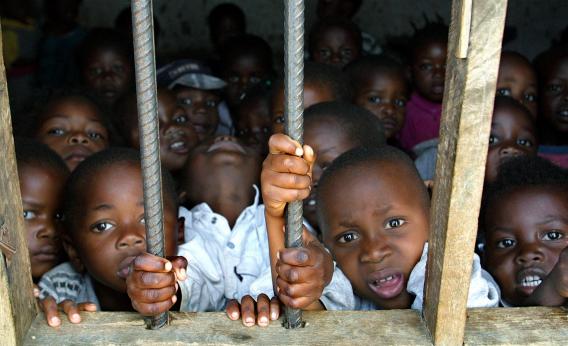
Photo by Alexander Joe/AFP/Getty Images
In this series, Bjorn Lomborg explores the smartest investments to respond to global challenges like hunger, disease, sanitation, and climate change—and readers get to have their say. See the other articles here. And find out which investments are currently at the top of the Slate readers’ priority list here. Be sure to vote in the poll at the end of each article.
Last year, the world population reached 7 billion. It added the last billion in merely 12 years, similar to the time it took to add the fifth and sixth billion. Despite this rapid growth, the doomsday predictions of previous decades about the potentially disastrous consequences of rapid population growth have not materialized. Indeed, during the recent decades of rapid global population growth, various summary measures of individual well-being have in fact increased: For example, from 1960 to 2010, global life expectancy increased from 51.2 to 67.9 years, infant and maternal death rates declined substantially, education—and, importantly, also levels of female schooling—increased, global per capita food production and consumption rose, and the proportion of the global population living in poverty declined significantly.
In research released today for Copenhagen Consensus 2012, Hans-Peter Kohler of the University of Pennsylvania looks at sub-Saharan African nations that, among high-fertility countries, make the dominant contribution to world population growth. These nations are among the poorest and most vulnerable in the world, often having weak institutions and capacities to manage population growth.
“High-fertility” countries today account for about 38 percent of the 78 million people that are added annually to the world population, despite the fact that they are home to only 18 percent of the population. After 2060, the world’s population is projected to grow exclusively as a result of population growth in today’s high-fertility countries.
Kohler notes that the overall Sub-Saharan African population increase peaked in the early 1980s and has been declining from its pinnacle of 2.8 percent from 1980 to 85 to 2.5 percent from 2005 to10, although growth remains more than twice as high as the global rate.
The overall growth rate masks substantial variation. Nine countries are expected to more than triple their population between 2010 and 2060, with population growth rates between 2.2 and 3.0 percent: Burkina Faso, Niger, Zambia, Malawi, Somalia, Tanzania, Uganda, Mali, and Madagascar.
Many high-fertility Sub-Saharan African countries have a considerable—and possibly growing—“unmet need” for family planning: This means women who are not using any contraception but do not want more children, or want to delay the next child. About 25 percent of sexually active women would like to limit their fertility but do not use family-planning methods.
Family-planning programs that facilitate a decline in fertility and a reduction in population growth rate would seem to be potentially highly beneficial interventions that should be expanded. And yet, as Kohler outlines, this conclusion has been subject to a long-standing and sometimes heated debate, often questioning the very basic pillars of this deduction.
This debate has sometimes raised more questions than answers: How detrimental, if at all, is population growth for economic development, individual well-being, and the attainment of development indicators such as the Millennium Development Goals? Do family-planning programs have causal effects toward reducing fertility, or would observed declines in fertility areas also have been observed in the absence of these programs? Is there a window of opportunity in coming decades in which declines in population growth could provide a “demographic dividend” that would facilitate the social and economic development in some of the world’s most developed countries?
In the last two decades, a growing body of research has substantially strengthened the case for family-planning programs—documenting, for example, the significant effects of these programs toward reducing fertility, increasing education for mothers, improving women’s general health and longer-term survival, increasing female labor force participation and earnings, as well as child health.
However, the attempt to obtain reasonably reliable estimates of both the benefits and costs of these programs remains very challenging.
Kohler draws on recent estimates to find that expanding family-planning services to all women with unmet needs—215 million women—would require an additional annual expenditure of $3.6 billion, bringing the total cost to $6.7 billion annual. Three-quarters of these additional expenses would be required for program and other systems costs related to expanding family planning services, while only 16 percent would be required for the supplies and contraceptive commodities.
The benefits are large. Reduced fertility, increased child spacing, and possible reductions in unwanted fertility are likely to reduce infant and maternal mortality, each year leading to 150,000 fewer maternal deaths and 600,000 fewer motherless children. These effects alone, Kohler estimates, are worth more than $110 billion, meaning that each dollar spent will achieve $30 to $50 of benefits.
But moreover, it is also estimated that reduced fertility will lead to higher levels of female education, increases in female labor force participation and earnings. At the same time, fewer children and more men and women in the work force will increase economic growth over the coming decades. Essentially, reductions in fertility and population growth rates would result in sustained increases in GDP per capita over several decades. This could lead to an extra benefit of perhaps $60 for every dollar spent.
With the caveat that knowledge about the interactions between population and development remains limited and heated discussion takes place about many assumptions, Kohler’s research suggests substantial benefit-cost ratios for family planning programs. Altogether, he finds that every dollar spent in this area could result in benefits worth about $90 to $150.
Kohler’s analysis adds further weight to the argument that family planning programs are a good economic investment, especially in light of continued population growth in the world’s worst-off countries: That upward of one-quarter of women want to limit their fertility but are not using any contraception points to a real need for greater emphasis on this area.
Today we only look at one solution, but you still have to rank it, keeping in mind that many other solutions—from many other challenges—vie for our attention and limited funding. Where should family planning fit in?
Tomorrow, we will look at natural disasters like floods and earthquakes. These often capture more media attention than the sorts of ongoing challenges we have looked at to date, but are there cost-effective ways to increase community resilience and save more lives?
In this series, Bjorn Lomborg explores the smartest investments to respond to global challenges like hunger, disease, sanitation, and climate change—and readers get to have their say. See the other articles here. And find out which investments are currently at the top of the Slate readers’ priority list here. Be sure to vote in the poll at the end of each article.