Dream Team
-

In both Europe and America, the age at which most people start having sex is 17. But that's where similarities about teen sexuality begin and end. Teen pregnancy rates in the United States are three to six times higher than in Western European countries. This means that one out of every three American teenage girls becomes pregnant at least once before she reaches the age of 20. (Even poor countries like Algeria, Sri Lanka, China, and Estonia have lower teen birth rates than we do.) The gap between Europe and the United States for sexually transmitted diseases is even greater—gonorrhea and chlamydia rates are 20 to 30 times higher here than in the Netherlands, for example.
What explains these hugely varying outcomes? At the heart of the answer lies a contrast in attitudes toward teen sexuality. This is clear from research about how families talk about sex. And it's also clear from advertising campaigns. The caption for this light-hearted German ad reads "Prevents Shortsightedness." Can you imagine an ad like it in the United States?
-

An apple and a condom a day keeps the STD away! Here's another German ad, with the tagline: "For My Health." Germany's approach to safe sex is based on behavioral research showing that honest and humorous messages about sex are more effective than scare tactics. Their HIV rate is six times lower than ours.
-

The United States and the Netherlands are two countries with similar economic, educational, and family-planning resources. And yet they have the highest (us) and lowest (them) teen pregnancy rates in the Western world. Dutch-American sociologist Dr. Amy Schalet conducted in-depth interviews with teens and parents about adolescent sexual mores in both countries. She found that in the United States, teen sexuality is dramatized as an "overpowering force." Parents commonly talk about their kids' hormones "raging out of control." If teen sexuality is destined to be reckless and dangerous, then fear is the only hope of controlling it—as you can see in this American ad. The idea is that sex is like a big industrial fire—dangerous, scary, and bad. And having sex without a condom is like fighting a big industrial fire naked—very bad. But does that mean that having sex with a condom is like fighting a big industrial fire in a spacesuit? Not very appealing. Why would this image motivate teenagers to use condoms?
-

European public health campaigns tend to focus heavily on the theme of love as a key safe-sex message—for example, in this German ad with the tagline "give the gift of love." By contrast, many American parents don't believe that teenagers are capable of experiencing real love. We also have a Hollywood view of true love as rare and extraordinary—it only happens to a few lucky people, who, by the way, happen to be skinny and beautiful. If you don't have the expectation of falling in love, why would you wait to be in love to have sex?
-

The Dutch see love as common, ordinary, and something teens as well as adults can expect to experience. Their corresponding expectation is that sex only occurs within a loving, committed relationship. Here is the Dutch government's public health campaign: "Step 1: You fall in love. Step 2: She feels the same. Step 3: You kiss. Step 4: You use a condom." There are probably a few steps between 3 and 4, but you get the idea. Research shows that 74 percent of Dutch teens are in a committed relationship with their sexual partner and 80 percent enjoyed their first sexual experience. In this Dream Team ad from Europe, love and sex with a condom go hand in hand.
-
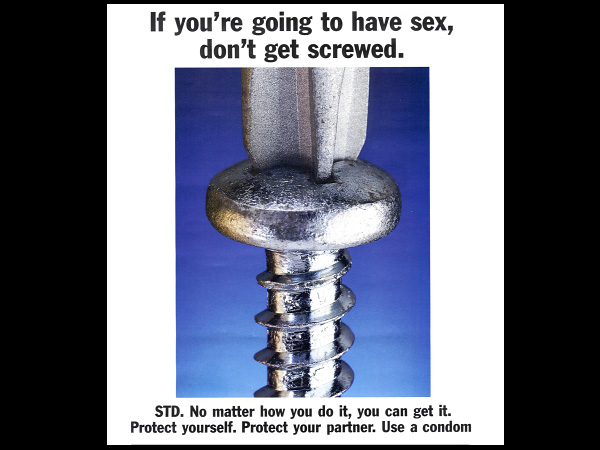
Because the Dutch view teen sexuality through the lens of a healthy relationship, Dutch parents don't see a clash between what boys and girls want, and they don't treat sons and daughters differently. Many American parents, on the other hand, set up an inherent tension: "Boys want sex and girls want love." This American ad, promotes the idea of conflict, with the threat "Don't get screwed!"
-

How do different cultural approaches affect how teens experience sex for the first time? The majority of U.S. teens—63 percent of boys and 69 percent of girls—wish they had waited longer to have sex, compared with only 5 percent of boys and 12 percent of girls in the Netherlands. This is perhaps the saddest statistic of all, because it suggests that for most American teens, their first sexual experience is not a good one, it is not with the right person, and it happened before they were ready. It also dispels the myth that boys just want sex. If that's true, why do the majority of American boys wish they had waited longer too?
-

According to Schalet, Dutch parents struggle with their teens' emerging sexuality, but they deal with it by bringing the issue out into the open and into the home, where they can supervise. Nine out of 10 Dutch parents told Schalet they have allowed or would allow a romantic sleepover under the right circumstances: With a child who was 16 or older and in a loving committed relationship that the parents observed develop gradually. It is common for Dutch teens to sit down together with each set of parents to discuss why they think they're ready to have sex, and to seek permission.
This German ad takes the idea of bringing sexuality out in the open and into the home quite literally. The words translate to "spontaneously" (with a condom) and "foolishly" (without a condom). Would the United States create a public health ad about sex in the kitchen?
-

The first time they had sex, 64 percent of Dutch teens used birth control, compared with only 26 percent of American teens. Most of the time, the Dutch teens used pills. Think about it for a minute: The majority of Dutch teens are making an appointment, going to a clinic, getting a prescription filled and starting birth control before they have sex. Meanwhile, in the United States, the average time between first having sex and first making a family-planning visit is almost two years. Here, 70 percent of school-based health clinics are forbidden from providing condoms or other birth control, even as 80 percent of them are busy diagnosing STDs and pregnancy.
In addition, almost half of the Dutch kids used both condoms for STD protection and the pill or another like method for birth control. This even has a nickname: "Double Dutch!" Only 17 percent of American kids protected themselves this way.
-

The European approach to advertising about birth control has given Planned Parenthood, where I work as a doctor, some ideas. Here's a new condom line called "Proper Attire—Required for Entry." These condoms are marketed to women with fig-leaf art and the taglines "Dress him up" and "Dress for success." Another line: "Old stereotypes about who should buy condoms are so last season!"
-

Trojan has also flirted with a playful approach to birth control advertising. This ad here’s the video) makes fun of men who don't use condoms by turning them into cute pigs who can't get any play. One buys a condom and "evolves" into a very hot guy. Nicely done.
Except that both Fox and CBS refused to air the commercial. According to the New York Times, FOX said that "Contraceptive advertising must stress health-related uses rather than the prevention of pregnancy." What exactly do they think contraception is for? CBS wrote, "While we understand and appreciate the humor of this creative ad, we do not find it appropriate for our network even with late-night-only restrictions." What about all the ads with much more sexually graphic messages on TV throughout the day?