Meet the Hindustani Malcolm X
Looking for pulse-pounding excitement in Richard Attenborough's Gandhi.
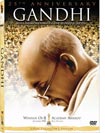
Imagine it's 1982 and you're rooting for Tootsie to win the Academy Award for best picture. You have no hope. Why? Because the competition, Richard Attenborough's Gandhi, embodies the hopes and dreams of hundreds of millions of impoverished Indians. You think I'm making this up? During the ceremony, Attenborough actually accepted that particular statuette on behalf of "Mahatma Gandhi himself" and, more cloying still, "his plea to all of us to live in peace." What message was the academy supposed to send the world? "Congratulations on that freedom struggle, India, but what can we say? Dustin Hoffman looks great in a dress!" So, while I'm sure the film richly deserved (cough) its eight Oscars, the producers did have an ace up their sleeve: the pity vote.
But now that Columbia Pictures has released a special 25th–anniversary-edition DVD—and now that India is no longer the sick man of Asia—the time has come for a cold-eyed assessment of the 191-minute monster. To be honest, when I first set out to write this essay, I figured, "I'll keep it real and drop bombs on Gandhi." But watching the film again, I was struck by how much of it I remembered vividly. It's difficult to overstate Gandhi's impact on my life and on the world. Even now, veterans of the anti-apartheid movement praise the movie as an inspiration, and high-minded do-gooders have dubbed an Arabic version for screening across the West Bank. While Gandhi isn't about to bring peace to the Middle East, it's actually a pretty great movie.
I was too young to see Gandhi in theaters, but I remember watching it with my immigrant parents when it finally aired on one of the broadcast networks. For my family and thousands like it, Gandhi was a landmark event that announced, in a strange way, our arrival on the cultural scene. Apart from tiny figures fleeing some massive cyclone, South Asians were vanishingly rare on American television in those dark days. Gandhi was pretty much the only game in town when it came to big-screen brown man rabble-rousing. So, you can imagine my excitement as I watched Ben Kingsley portray a diminutive dhoti-wearer karate-chopping his way to freedom (or so I imagined it).
And the first 45 minutes of Gandhi, when Gandhi was still a tart-tongued lawyer on the loose, are the rabble-rousingest of all, full of the kind of pulse-pounding excitement normally reserved for movies starring the Rock. Early in Gandhi we see a train conductor drag a handsome, well-coiffed version of our hero from his compartment and hurl him, designer luggage and all, to a station platform in god-knows-where—standard treatment for nonwhites presuming to travel first-class in South Africa. When I was a kid, this was one of several points in the movie when I wanted to punch the TV. And to my surprise, Ben Kingsley singled out this scene in one of the DVD's many extra features, noting ominously that you should never throw a young man off a train—it will come back at you. This is Gandhi as Malcolm X, an educated brown man ready to do damage (in a good way).
This part of the movie is actually so good that it rises to the level of interactive entertainment. Watching an enraged Muslim pledge to kill the man who brings dishonor to his home and his wife (a, shall we say, un-Gandhian sentiment), I get really worked up right along with him. When a still-young Gandhi tells his audience to get more methodical and nonviolent in its rage, I think right along with the mob, "This guy has a point!"
The next 145 minutes are, alas, considerably less entertaining. Thirty years of India's independence struggle are collapsed into a sanitized costume drama backed by the soulful sounds of Ravi Shankar. Saintly guru Gandhi slowly takes over from calculating badass Gandhi, and the action shifts from hardscrabble South Africa to a lovingly photographed India. Gandhi sews. Gandhi speaks to the nation. Gandhi is imprisoned. In between, Attenborough stages endless tableaus in which a lovable, head-waggling Ben Kingsley delights various visiting white people—Martin Sheen, Candice Bergen, and a few other stand-ins for the audience—with his Eastern wit and wisdom. For all their manifest silliness, these scenes are only slightly more painful than those in which friends and associates plead with Gandhi to break his latest hunger strike. How's that for action?
The truth is, Gandhi would have been a lot less boring if it had been a little less worshipful. But a more nuanced portrait would have undermined Attenborough's central point: that Gandhi shamed the British into quitting India. That's a somewhat-generous take. Some Britons embraced Gandhi's message of peace, love, and vegetarianism; at least one, Madeleine Slade, actually moved to India to be his personal assistant. (Imagine this sequel: The Devil Wears Loincloth.) Yet others cheered on the renegade general who gunned down more than 1,000 defenseless Indians in 1919. And then there were those, like Winston Churchill, who fought tooth and nail against independence, predicting (correctly) that it would lead to an unspeakable bloodbath.
A less-worshipful Gandhi would also have raised all sorts of uncomfortable questions about post-independence India. But for Attenborough to capture the country on the epic scale he wanted, he needed the cooperation of the Indian government. (When you consider that 400,000 Indians showed up to recreate Gandhi's 1948 funeral in the heart of New Delhi, you'll see what I mean.) So, did Attenborough pull his punches to make sure everything went smoothly? After all, Attenborough warmly cites Indira Gandhi's role in shepherding the project. And Indira Gandhi, lest we forget, was no mahatma. She was behind the suspension of Indian democracy in the mid-1970s and certainly shrewd enough to recognize that Attenborough's film would be a massive propaganda coup. Sure enough, Pandit Nehru—Indira's dad—is portrayed in the film as second only to Gandhi in the pantheon of heroic Indians.
In stark contrast, Muhammad Ali Jinnah, founder of Pakistan, is played as a classic screen villain. The only thing missing is the eye patch. Partition was a massive human tragedy. My parents are from Bangladesh, a heavily Muslim country first carved out of India as part of Pakistan, and they lived through the (still-reverberating) ramifications. But partition wasn't a dastardly plot hatched by an oleaginous Anglophile. Indeed, some historians argue that "Pakistan" was a negotiating strategy gone wrong: Jinnah askedfor a Muslim state so he could gain leverage to protectthe interests of Muslims in a united India. He never expected Nehru to call his bluff. This Nehru was no saint. He was something a lot more interesting. When you consider that India and Pakistan had been at war three times before Gandhi was made, Attenborough's interpretation of partition takes on added significance.
Smart critics have exhaustively cataloged Gandhi's other errors and elisions, and I could go on. But there's something a little churlish about this. As directors go, Attenborough is insanely humble, acknowledging that he had to leave out large and important parts of Gandhi's story. Yes, Gandhi is a hagiography and not a nuanced, darkly shaded, or even very convincing portrait of an ambitious and deeply strange man. And as an account of the muddled, messy origins of Indian independence, the filmis guilty of historical malpractice. But taken as a black-and-white morality play, Gandhi is unmatched. Simplifications and all, this is the movie my parents wanted me to see as a child—and it's the movie I'd want my own (purely theoretical) children to see as well.