DoubleX Audio Book Club: The Immortal Life of Henrietta Lacks
Our critics discuss Rebecca Skloot's book.
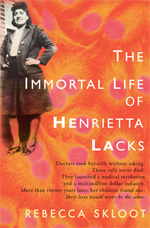
To listen to the DoubleX Audio Book Club discussion of Rebecca Skloot's The Immortal Life of Henrietta Lacks, click the arrow on the player below.
You can also download the audio file here or subscribe to the DoubleX podcast feed via iTunes or directly with our RSS Feed.
This week, the DoubleX Audio Book Club discusses The Immortal Life of Henrietta Lacks, which tells the amazing story of a Baltimore woman who died of cancer, but whose cells—which seemed to have some magical power to multiply—were used to power a host of medical advances. In the meantime, author Rebecca Skloot finds out, her own children do not have health insurance and barely understand what an amazing contribution their mother's cells have made.
DoubleX co-editor Hanna Rosin praises this book as a model work of nonfiction. Her fellow editor Emily Bazelon puzzles over whether people should have any right to be compensated when their cells are used in the service of science. New Yorker writer Margaret Talbot is moved by the final scene, in which Skloot takes the family into the lab to see their mother's cells under a microscope.
DoubleX podcasts appear every other Thursday. Become a fan of the DoubleXGabfest on Facebook.