The American Way of Dentistry
The story of my teeth.

If you were to run into me at one of the New York gatherings to which I am occasionally invited, you might think that I was born into the cocktail class. I'm reasonably well-educated and confident, I have an interesting job, and I know which fork to use.
Until a few years ago, though, you might have spotted a clue that I was a newcomer to the haute bourgeoisie: my snaggle-toothed smile. Many Americans believe they live in a classless society, but this conviction is tested by the sight of a mouth packed with mangled or missing teeth. It's visual code for hillbilly. In my case, that happens to be wrong. I was raised not in an Appalachian holler but in the industrial north of England. Many Americans are intimidated by a British accent, which connotes status and smarts, but if there's one area where they have a superiority complex, it's teeth.

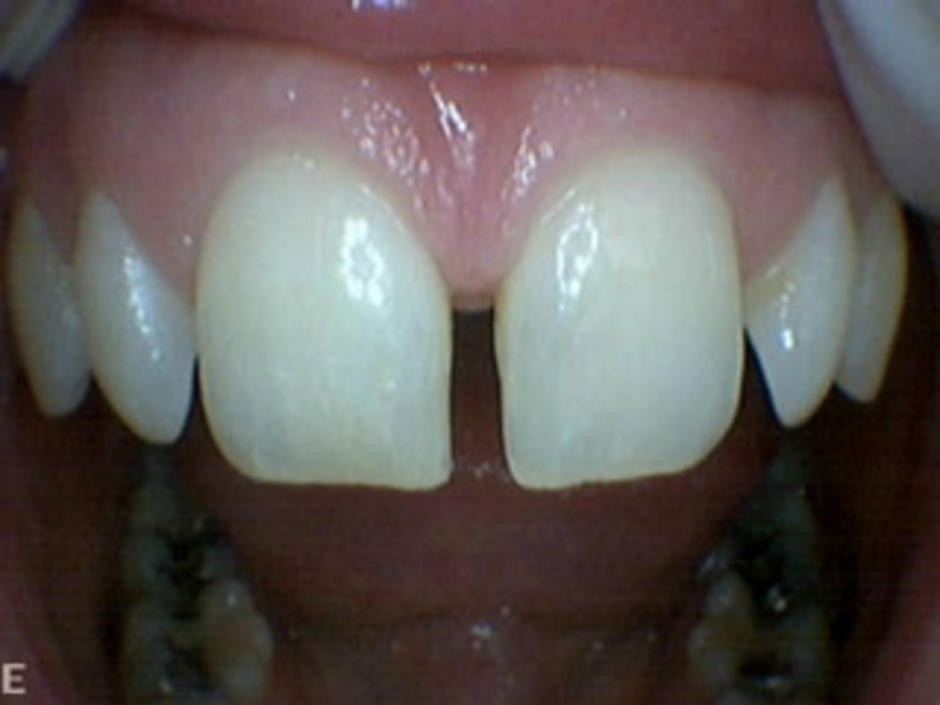
I feel guilty about bringing up The Big Book of British Smiles. British dentistry's aesthetics may not be up to American standards, but when I was a kid, anyone could get an appointment to see a National Health Service dentist, and there was no out-of-pocket cost for treatment. Still, in my working-class community in Manchester, perfect teeth were seen as a bit of an affectation. Until my mid-30s I had a gap between my front teeth. When American acquaintances asked whether either of my parents sported a similar diastema, I would answer truthfully that I had no idea. My interlocutors would often leap to the sad conclusion that I was an orphan or an adoptee, which I'm not. It's just that everyone in my family, and every other adult that I grew up around, had false teeth by the time they were 30.

Whenever I asked my maternal grandmother how old she was, she would reply, "As old as my eyes and a little bit older than my teeth." And on my first day at a fancy secondary school, I had a hard time concentrating on the long list of rules the senior mistress was attempting to impart because I couldn't take my eyes off her gold tooth—I was boggled by the sight of someone over 50 who still had at least some of the teeth she was born with.
As a child, I visited the dentist somewhat sporadically. Unfortunately, the dentists embraced the local attitude that dentures were inevitable and nothing to be feared or fought against. Within a few years of my permanent teeth coming in, about a quarter had been pulled or crowned with little effort made to save them. I was destined for dentures, so why waste time or effort preserving my gap-toothed, maloccluded, decay-ridden choppers?
Of course, it was my fault that the dentists saw the need for these procedures in the first place. I didn't even own a toothbrush—my parents had never brushed their teeth, and as adults their oral hygiene was achieved by soaking rather than brushing. I'd never even heard of dental floss, and I ate far too much candy. I prefer not to think about the excruciating pain that decay and resulting abscesses caused—pain that you can hear, that stops the world, that makes listening to the teacher or concentrating on homework impossible.
There would be little point in showing you photos from that era, because like most people who feel uncomfortable about their teeth, I always kept my mouth closed in front of a camera. If I couldn't resist a laugh, I made sure to put my hand in front of my face. Picture Shane McGowan from the Pogues, and you won't be far off base.

During my years at university in England, I finally started to brush my teeth regularly, and I got more crowns, but the dentist never suggested that I do anything about the movement caused by missing teeth or address my overbite so that I could chew better. That was how things stayed for the next decade, even after I moved to the United States. I lived in the land of Hollywood smiles, but I didn't have dental insurance, and I couldn't afford to see a dentist except in the direst of circumstances, such as an infected root canal.
About 17 years ago, I coughed and shattered a front tooth, and a referral from my boss led me to the dentist who would change my life. At first I couldn't afford to do much more than tackle the most aesthetically offensive problems. My dentist (I'll call her Dr. Lifesaver) wrote me a very sweet note recommending that the University of Washington take me as a patient in its dental clinic. Unfortunately, the clinic turned me down because my case was too complicated for the students. A couple of years later, I went to work at Microsoft, and for the first time in my American experience, I had dental insurance. Soon I also had access to a flexible spending account. Since I didn't have kids or a car or any other huge expenses, I finally had the money to tackle my teeth.
I embraced American dentistry unreservedly: braces, new crowns, gum grafts, implants. The June Thomas Wing of Dr. Lifesaver's office housed a file as thick as a phone book, and I had so many specialists with offices on the 15th floor of Seattle's Medical-Dental Building—orthodontist, endodontist, periodontist—that some people thought I worked there.
Because my dental coverage, like most, had an annual reimbursement cap and because the procedures were complicated, the reclamation project took more than a decade and about $45,000 of my own money to bring to a state of near-completion. I moved to New York before finishing the treatment, but I finally felt good about my teeth. I opened my mouth when I smiled, and even though I didn't have a glittering grin (the gradual nature of the process prevented a dramatic change of shade), my teeth were healthy. I could chew and—most important—I had no dental pain.
A few weeks after I started researching this story, I developed a sore throat. My glands were swollen, and I felt tired and lightheaded. I'd been traveling a lot—by planes, trains, and subway—and I had spent time on college campuses and in clinics. Since swine flu had just hit the United States, I wondered whether I'd picked up the virus somewhere along the way. Then one morning, I bit into a piece of toast and felt a sharp pain. It was as if I had driven a pin deep into the gum under that same tooth that a cough had smashed all those years earlier. Every subsequent bite seemed to drive the sharp point a little deeper. I still didn't know whether it was a medical or a dental problem—the flu can sometimes bring on a toothache—but I knew which one I was pulling for. If the sickness was located anywhere other than in my mouth, a visit to the doctor would be covered by my medical insurance. A trip to the dentist's office, on the other hand, could cost me serious money.
The problem turned out to be "internal resorption"—a suicidal tooth, as it seemed to me. The area had become infected, and Tooth No. 26 had to come out. I'd lost a lot of bone, so we couldn't just slap in an implant. Instead, an oral surgeon pulled the tooth and inserted some artificial bone in the hope that it would fuse with my own and provide a stable home for a new titanium anchor. For the four or five months it would take to see if the bone "took," I would have to wear a "flipper," which turned out to be a euphemism for a partial denture.
At first, the flipper didn't fit—it was painful, and it would become detached at the slightest provocation, especially when I was eating or speaking. My diction was a little less crisp, and suddenly I remembered those years of social awkwardness—the worry that people were looking at my mouth in dismay, the fear that the device would fly out as I bit into my lunch or launched into a presentation. But I also knew that it was temporary. I had a job that allowed me both the time to return to the dentist's office for adjustments until the device fit comfortably and the means to attempt this complicated treatment. My missing tooth is artfully disguised, and within a year, the flipper should be out of my life. The final out-of-pocket cost will be somewhere between $4,000 and $5,000.
What if I didn't have that kind of money?
Everybody knows about the crisis in American medical care. Nobody knows about the crisis in American dentistry, which shares some symptoms with the larger health care mess and differs from it in other, more intriguing, ways. Dentistry is the shirttail cousin of the health care system. It is the branch of medicine the affluent use most, but in many ways it is the least familiar, its shortcomings and inequities hiding in plain sight. Few people take dentistry seriously enough to contemplate the possibility that it might be in a dire state. But it is. In the coming days I'll try to explain why.
Next: The Disappearing Dentist
Click here to see a video slide show about the painful history of dentists in the movies.
Got a dentist story to tell? Become a fan of "The American Way of Dentistry" on Facebook.