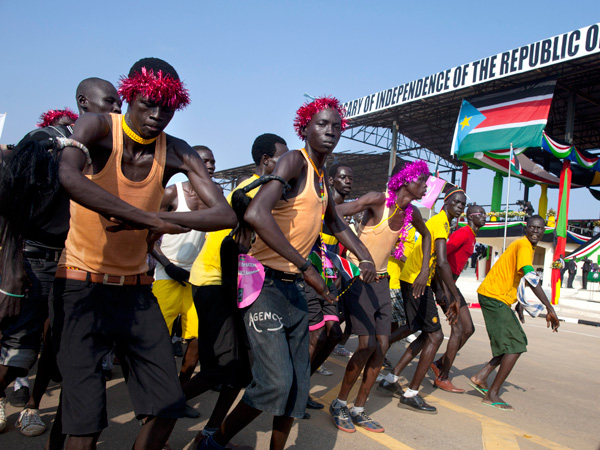
Monday marks the first year of the world’s youngest country, South Sudan. Tensions between Sudan and South Sudan remain high, and the two countries are still unable to agree on long-standing disputes over oil reserves and borders. At a celebration Monday (pictured), South Sudan’s president declared his country’s next step was economic independence, a phrase that may have a bitter ring after corrupt South Sudanese officials recently admitted that they had stolen $4 billion in public funds. In the weeks leading up to the anniversary, Oxfam sent two photographers to the rival capitals to capture scenes of everyday life. What follows is a look at life in the two Sudans.
Paula Bronstein/Getty Images.
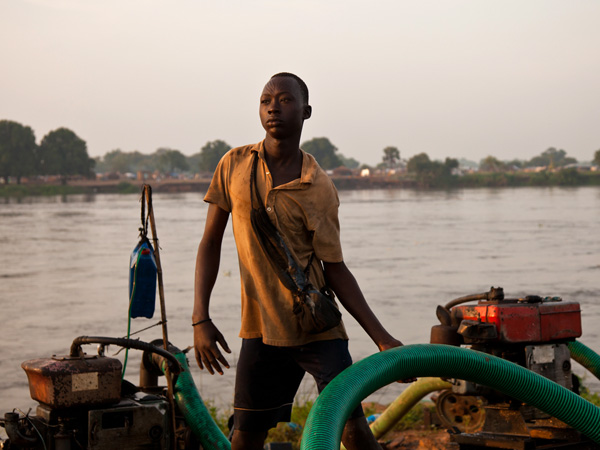
The Nile runs though Sudan and South Sudan, shaping lives in the two feuding countries. In Juba, the capital of South Sudan, most homes are reliant on water traders like Michael Lokul, 20. He and his brother own five generators, which they use to extract water. He gets paid about 10 South Sudanese pounds ($2) for each water truck he fills up.
Adriane Ohanesian/Oxfam.
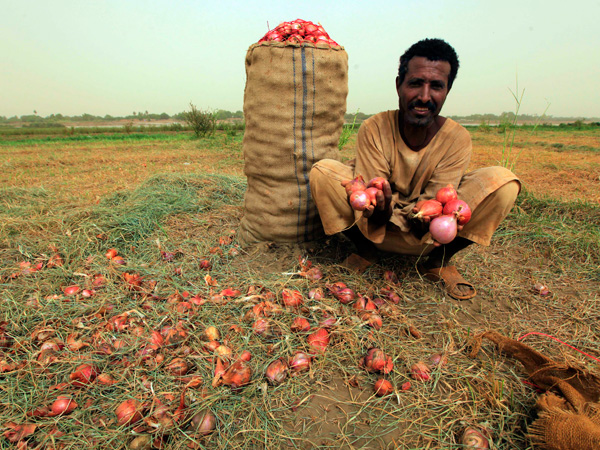
Up north, in Sudan’s capital, Khartoum, livelihoods are also dependent on the Nile. Farmers such as Ebeed Mokhtar, who harvests onions, relies on Nile water to irrigate his small farm.
Mohamed Nureldin/Oxfam.
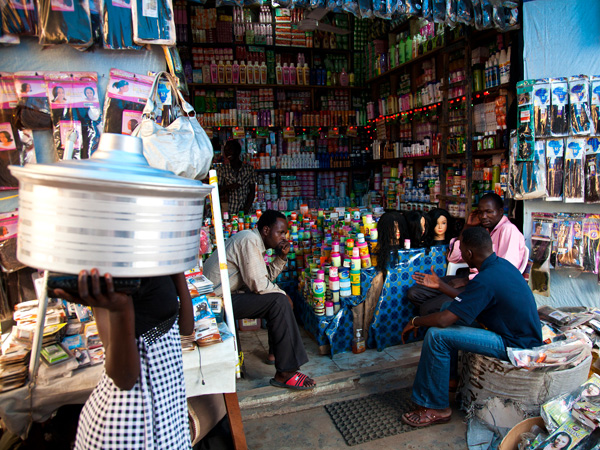
The lives of individuals in Sudan and South Sudan continue to be intertwined on a daily basis. Shops like run by Sudanese living in South Sudan are a common sight in Juba. Brothers Abdelshafi Mohamed, 24, and Ahmed Mohamed, 18, from Darfur are attempting to finance their way through Juba University by selling wigs and perfume.
Ohanesian/Oxfam.
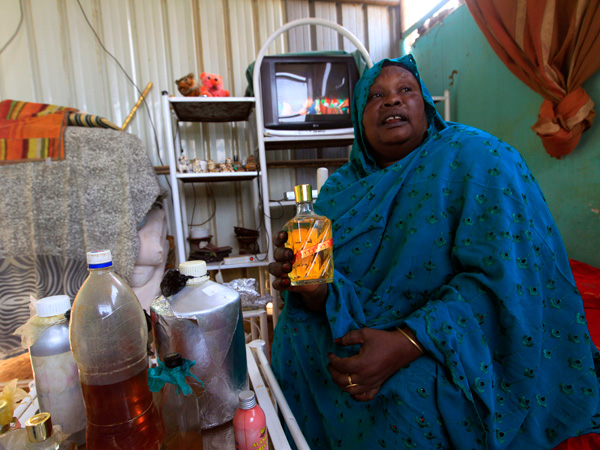
Ayaak Pol, pictured, sells perfume in Khartoum. She’s originally from the south but has chosen to stay in the north, where most of her customers are. “I used to also send my perfume to Juba, but now there are few flights between Sudan and South Sudan, so I have stopped,” she said.
Mohamed Nureldin/Oxfam.
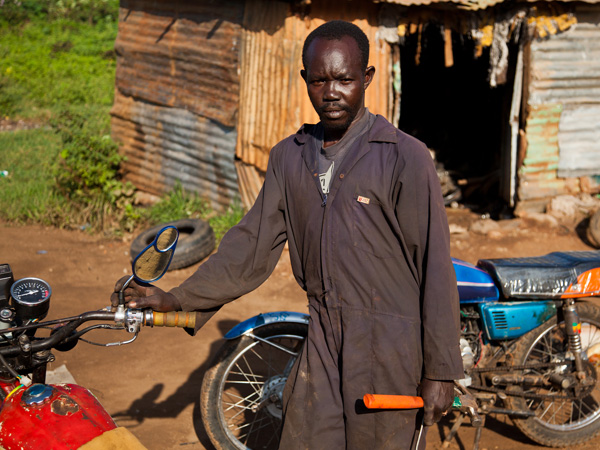
A boda-boda, or motorcyle taxi, is a common way to get around in Juba. Mechanic Samuel Wani is from the South Sudanese state of Western Equatoria but works in the capital repairing these bikes.
Adriane Ohanesian/Oxfam.
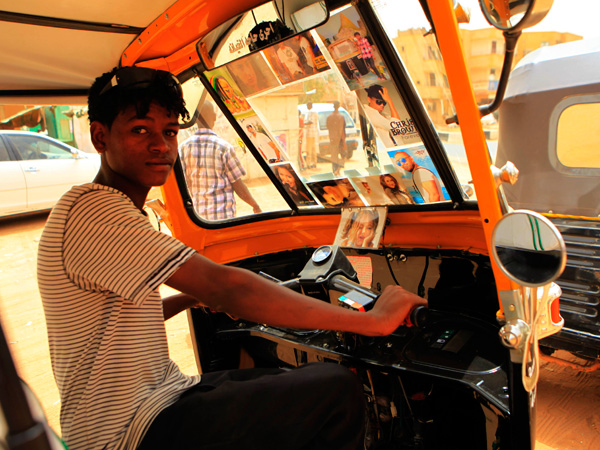
As in the south, drivers in Sudan often decorate their rickshaws with stickers, lights, and other adornments. Hassan Ali, 19, says he earns 50 to 60 Sudanese pounds a day ($11-$14) driving people around in Khartoum.
Mohamed Nureldin/Oxfam.
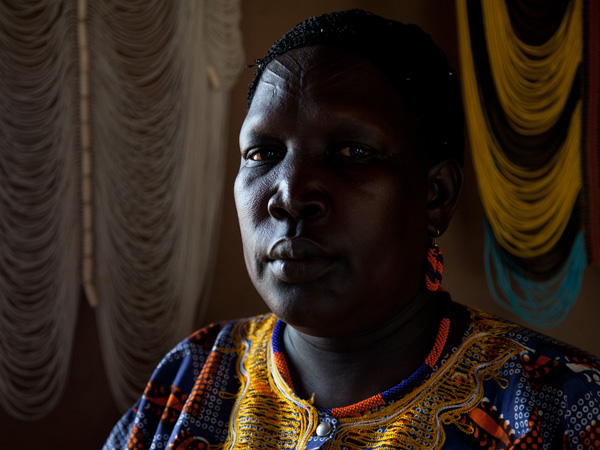
Mary Padar, 45, makes traditional jewelry and corsets through the Roots Project, an international nongovernmental organization in Juba. She cares for her seven children with what she earns selling jewelry.
Adriane Ohanesian/Oxfam.
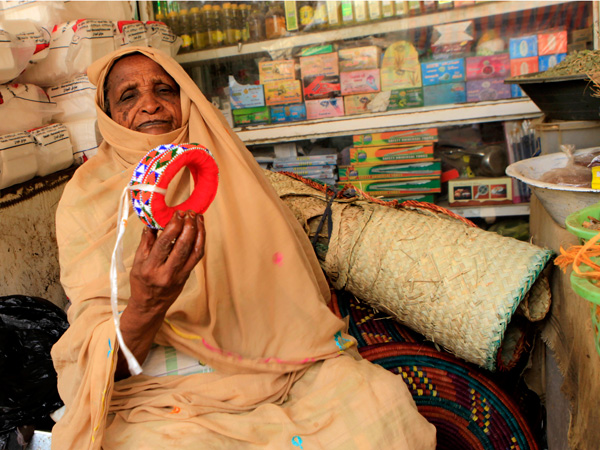
Jewelry can also be a source of income for women in Sudan. At women’s markets, such as this one in Khartoum, Hawaa Mosa sells baskets, pots, and jewelry.