The American Way of Dentistry
A look at the coming crisis.
The Story of My Teeth
If you were to run into me at one of the New York gatherings to which I am occasionally invited, you might think that I was born into the cocktail class. I'm reasonably well-educated and confident, I have an interesting job, and I know which fork to use.

Illustration by Dave Franzese
Until a few years ago, though, you might have spotted a clue that I was a newcomer to the haute bourgeoisie: my snaggle-toothed smile. Many Americans believe they live in a classless society, but this conviction is tested by the sight of a mouth packed with mangled or missing teeth. It's visual code for hillbilly. In my case, that happens to be wrong. I was raised not in an Appalachian holler but in the industrial north of England. Many Americans are intimidated by a British accent, which connotes status and smarts, but if there's one area where they have a superiority complex, it's teeth.

I feel guilty about bringing up The Big Book of British Smiles. British dentistry's aesthetics may not be up to American standards, but when I was a kid, anyone could get an appointment to see a National Health Service dentist, and there was no out-of-pocket cost for treatment. Still, in my working-class community in Manchester, perfect teeth were seen as a bit of an affectation. Until my mid-30s I had a gap between my front teeth. When American acquaintances asked whether either of my parents sported a similar diastema, I would answer truthfully that I had no idea. My interlocutors would often leap to the sad conclusion that I was an orphan or an adoptee, which I'm not. It's just that everyone in my family, and every other adult that I grew up around, had false teeth by the time they were 30.

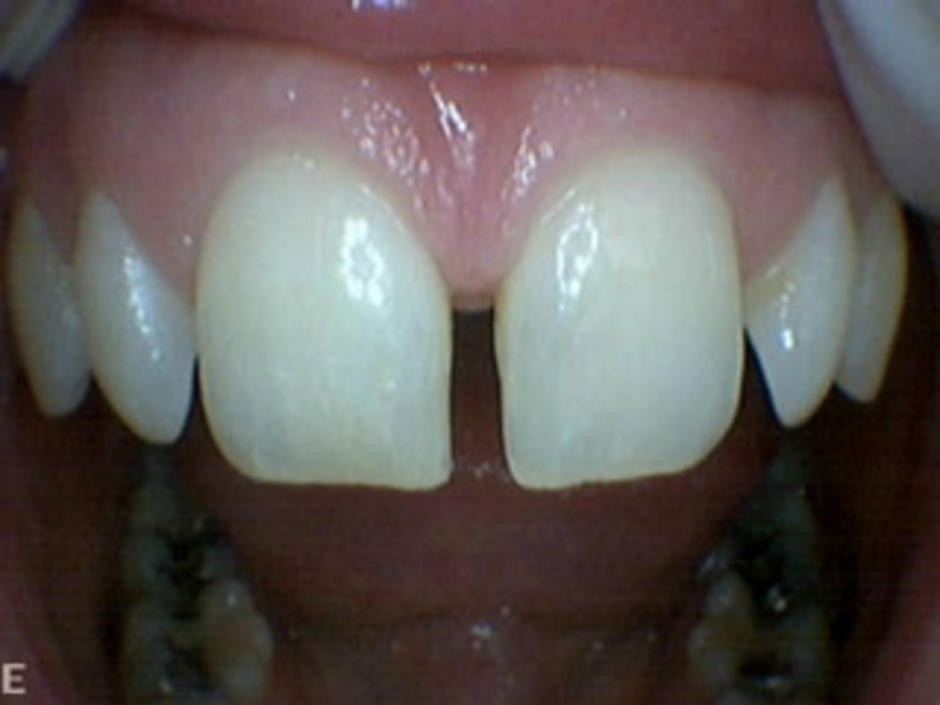
Whenever I asked my maternal grandmother how old she was, she would reply, "As old as my eyes and a little bit older than my teeth." And on my first day at a fancy secondary school, I had a hard time concentrating on the long list of rules the senior mistress was attempting to impart because I couldn't take my eyes off her gold tooth—I was boggled by the sight of someone over 50 who still had at least some of the teeth she was born with.
As a child, I visited the dentist somewhat sporadically. Unfortunately, the dentists embraced the local attitude that dentures were inevitable and nothing to be feared or fought against. Within a few years of my permanent teeth coming in, about a quarter had been pulled or crowned with little effort made to save them. I was destined for dentures, so why waste time or effort preserving my gap-toothed, maloccluded, decay-ridden choppers?
Of course, it was my fault that the dentists saw the need for these procedures in the first place. I didn't even own a toothbrush—my parents had never brushed their teeth, and as adults their oral hygiene was achieved by soaking rather than brushing. I'd never even heard of dental floss, and I ate far too much candy. I prefer not to think about the excruciating pain that decay and resulting abscesses caused—pain that you can hear, that stops the world, that makes listening to the teacher or concentrating on homework impossible.
There would be little point in showing you photos from that era, because like most people who feel uncomfortable about their teeth, I always kept my mouth closed in front of a camera. If I couldn't resist a laugh, I made sure to put my hand in front of my face. Picture Shane McGowan from the Pogues, and you won't be far off base.

During my years at university in England, I finally started to brush my teeth regularly, and I got more crowns, but the dentist never suggested that I do anything about the movement caused by missing teeth or address my overbite so that I could chew better. That was how things stayed for the next decade, even after I moved to the United States. I lived in the land of Hollywood smiles, but I didn't have dental insurance, and I couldn't afford to see a dentist except in the direst of circumstances, such as an infected root canal.
About 17 years ago, I coughed and shattered a front tooth, and a referral from my boss led me to the dentist who would change my life. At first I couldn't afford to do much more than tackle the most aesthetically offensive problems. My dentist (I'll call her Dr. Lifesaver) wrote me a very sweet note recommending that the University of Washington take me as a patient in its dental clinic. Unfortunately, the clinic turned me down because my case was too complicated for the students. A couple of years later, I went to work at Microsoft, and for the first time in my American experience, I had dental insurance. Soon I also had access to a flexible spending account. Since I didn't have kids or a car or any other huge expenses, I finally had the money to tackle my teeth.
I embraced American dentistry unreservedly: braces, new crowns, gum grafts, implants. The June Thomas Wing of Dr. Lifesaver's office housed a file as thick as a phone book, and I had so many specialists with offices on the 15th floor of Seattle's Medical-Dental Building—orthodontist, endodontist, periodontist—that some people thought I worked there.
Because my dental coverage, like most, had an annual reimbursement cap and because the procedures were complicated, the reclamation project took more than a decade and about $45,000 of my own money to bring to a state of near-completion. I moved to New York before finishing the treatment, but I finally felt good about my teeth. I opened my mouth when I smiled, and even though I didn't have a glittering grin (the gradual nature of the process prevented a dramatic change of shade), my teeth were healthy. I could chew and—most important—I had no dental pain.
A few weeks after I started researching this story, I developed a sore throat. My glands were swollen, and I felt tired and lightheaded. I'd been traveling a lot—by planes, trains, and subway—and I had spent time on college campuses and in clinics. Since swine flu had just hit the United States, I wondered whether I'd picked up the virus somewhere along the way. Then one morning, I bit into a piece of toast and felt a sharp pain. It was as if I had driven a pin deep into the gum under that same tooth that a cough had smashed all those years earlier. Every subsequent bite seemed to drive the sharp point a little deeper. I still didn't know whether it was a medical or a dental problem—the flu can sometimes bring on a toothache—but I knew which one I was pulling for. If the sickness was located anywhere other than in my mouth, a visit to the doctor would be covered by my medical insurance. A trip to the dentist's office, on the other hand, could cost me serious money.
The problem turned out to be "internal resorption"—a suicidal tooth, as it seemed to me. The area had become infected, and Tooth No. 26 had to come out. I'd lost a lot of bone, so we couldn't just slap in an implant. Instead, an oral surgeon pulled the tooth and inserted some artificial bone in the hope that it would fuse with my own and provide a stable home for a new titanium anchor. For the four or five months it would take to see if the bone "took," I would have to wear a "flipper," which turned out to be a euphemism for a partial denture.
At first, the flipper didn't fit—it was painful, and it would become detached at the slightest provocation, especially when I was eating or speaking. My diction was a little less crisp, and suddenly I remembered those years of social awkwardness—the worry that people were looking at my mouth in dismay, the fear that the device would fly out as I bit into my lunch or launched into a presentation. But I also knew that it was temporary. I had a job that allowed me both the time to return to the dentist's office for adjustments until the device fit comfortably and the means to attempt this complicated treatment. My missing tooth is artfully disguised, and within a year, the flipper should be out of my life. The final out-of-pocket cost will be somewhere between $4,000 and $5,000.
What if I didn't have that kind of money?
Everybody knows about the crisis in American medical care. Nobody knows about the crisis in American dentistry, which shares some symptoms with the larger health care mess and differs from it in other, more intriguing, ways. Dentistry is the shirttail cousin of the health care system. It is the branch of medicine the affluent use most, but in many ways it is the least familiar, its shortcomings and inequities hiding in plain sight. Few people take dentistry seriously enough to contemplate the possibility that it might be in a dire state. But it is. In the coming days I'll try to explain why.
The Disappearing Dentist
Besides the six mournful concertina airs, the dentist knew one song. Whenever he shaved, he sung this song; never at any other time. His voice was a bellowing roar, enough to make the window sashes rattle. Just now he woke up all the lodgers in his hall with it. It was a lamentable wail: "No one to love, none to caress, Left all alone in this world's wilderness."
—Frank Norris, McTeague
Dentists have never gotten much respect. Just look at The Hangover, this summer's surprise movie hit. Ed Helms' character, a dentist named Stu Price, is presented as a henpecked, insecure second-rater. Even his best friends don't think he deserves to call himself "doctor," a title they reserve for physicians. When novelists or screenwriters want to telegraph that a character is boring or unimaginative, they often make him a dentist—in the Harry Potter series, for example, Hermione Granger's parents aren't just muggles, or nonmagical people; they're dentists. This is of a piece with the widespread myth that dentistry is the profession with the highest suicide rate. In fact, there is no evidence that dentists kill themselves in greater proportion than the population at large. If anything, the data suggest the opposite.
Even so, during the 20th century's final decades, a dwindling number of Americans chose to become dentists. In the early 1980s, U.S. dental schools produced about 5,750 new graduates per year. In 2007, with a population that's nearly one-third larger, there were about 4,700. It's tempting to blame this decline on movies like Marathon Man and Little Shop of Horrors, which portrayed dentistry as a profession appealing only to Nazis ("Is it safe?") and sadists ("People will pay you to be inhumane"). But a likelier explanation is that there are fewer opportunities. In 1980, the United States had 60 dental schools; today there are 58, and class sizes are smaller.
Dental schools closed and downsized because they were too expensive to maintain. Unlike medical schools, where students do their clinical training in teaching hospitals that bear the costs of such practical education, dental students get their training in clinics run—and paid for—by the universities. The cost of administering these clinics increased by just over 50 percent between 1991 and 2001. Federal grants to support dental education (and medical education generally) have meanwhile become less plentiful. This is a bigger blow to dental schools because, unlike medical schools, they can't make up the difference with research grants. Prestigious universities have been especially keen to divert resources away from dental education to programs that attract rather than bleed funds. Among the dental schools that have closed their doors in the last three decades are those at Georgetown, Emory, and Northwestern. Currently, about 600-800 more dentists enter the profession than retire from it each year, but starting around 2014, as the baby-boomer dentists who graduated in larger classes start to retire, the number of practicing dentists will decline while the U.S. population continues to grow. (See Slides 26 and 27 in this presentation.) Boomer retirement will also contribute to a growing shortfall of medical doctors, of whom as recently as 1996 the United States was thought to have a surplus.
The shortage is compounded by dentists' growing inclination to work fewer hours. In 2006, 12.1 percent of the nation's private-practitioner dentists worked fewer than 30 hours per week. One contributing factor is that more women are becoming dentists. According to a study published in the May 2004 Journal of the American Dental Association, female dentists—who represented just 2.6 percent of active private dental practitioners in 1982, 12.8 percent in 1997, and 44.9 percent of the graduating dental school class of 2006—were likelier than men to work fewer than 32 hours per week. This was especially true, unsurprisingly, for women with young children.
A common complaint by health care reformers is that the medical profession has too many specialists and too few general practitioners. The same is true for dentists. Even as the number of dental-school graduates declined over the last three decades, the number of specialty training positions in fields like orthodontia and oral surgery held steady at around 1,200 per year. Twenty years ago, one-fifth of all dental-school graduates pursued specialization; at the end of the 20th century, the figure was closer to one-third.
This contraction is taking place at a time when the United States has far more teeth than ever before. Not only has the population grown from 227 million in 1980 to 307 million in 2009, but many more Americans are keeping their natural teeth into old age. Only a couple of generations ago it was the norm for elderly Americans to wear dentures, especially if they were working class. (That helps explain why Medicare still has no dental coverage, except in very limited circumstances when it is deemed medically necessary.) But according to a paper in the June 2000 JADA, the baby boom will be the first generation to enter retirement "with nearly a full complement of teeth." That translates into even more patients competing for fewer dentists' attention.
Economic theory says that when supply decreases or demand increases, prices go up. When both occur at once, prices go up a lot.
The Oral Cost Spiral
In 2007, Americans spent $95.2 billion on dental care, or $315 per capita. That represents only 4.3 percent of the $2.2 trillion ($7,421 per capita) spent on health care overall. It's no wonder, then, that dentistry and dental costs tend to be overlooked when policymakers crunch numbers.
Illustration by Dave Franzese
Still, most middle-class Americans—even those with health and dental insurance—tend to be more aware of the price of dental treatment because they're more likely to have to pull out their checkbooks when they visit the dentist. Although dental-insurance premiums remained relatively steady over the last decade, especially when compared with skyrocketing medical-insurance premiums, between 1998 and 2008 the increase in the cost of dental services exceeded that of medical care and far exceeded the overall rate of inflation. (The 30-year trend shows medical-care prices rising slightly more than dental prices. The chart below shows the overall consumer price index compared with the dental and medical indexes.) * And although spending on dental services is less than 4.5 percent of health care expenditures, a greater percentage comes out of patients' pockets. Whereas only 10.3 percent of physician costs, 3.3 percent of hospital care, and 26.8 percent of nursing-care expenses were paid out-of-pocket in 2007, Americans paid 44.2 percent of dental bills themselves. (See Table 2 of "Dentistry in Time of Recession" in the March 2009 issue of the New York State Dental Journal.)
This is mostly due to the nature of the coverage. When designing benefits packages, private employers and the federal government put a low priority on dental coverage, especially since the cost of providing medical insurance has exploded. For employees, this means "cost sharing"— high copayments even for people with "good" insurance plans. About 10 percent of private dental coverage isn't insurance at all, but, rather, a "discount plan" more analogous to shopping at Costco. Patients pay a membership fee, and when they go to a participating dentist they pay at a discounted rate. (Even the other 90 percent, some argue, doesn't fit the standard definition of insurance.) For low-income Americans enrolled in Medicaid, dental fees are set so low that many dentists won't treat them. Medicare, as I noted earlier, doesn't cover dental care except under a few unusual circumstances.
In her book Making the American Mouth, Alyssa Picard argues that the postwar orthodontics boom helped the upper middle class get in the habit of paying high out-of-pocket fees to care for its teeth. Ironically, this practice grew out of dentists' unfounded worry that their profession would go the way of the blacksmith as fluoridation reduced kids' immediate need for extractions and fillings. During the 1950s, the American Dental Association ran an advertising campaign to encourage orthodontic treatment. Gradually, paying for braces became an expected investment, part of the price of raising children, like test prep and college fees. Even now, dental plans rarely cover orthodontia, and the lifetime reimbursement limit is much less than the cost of braces, but parents feel pressured to buy their kids the straight, white smile that is the clearest physical indication of prosperity.
Despite its many limitations, it's better to have dental coverage than to be without it. The National Association of Dental Plans found that the 152 million Americans who had dental insurance in 2007 were 49 percent more likely to have visited the dentist for a checkup or cleaning in the previous six months and 42 percent more likely to take their children to the dentist twice a year.
As with medical insurance, Americans currently rely on their employers to provide dental coverage: 97 percent of people with private dental benefits receive them through work. Of that group, employers cover at least part of the premiums or fees for 70 percent of beneficiaries (pretty much all companies that offer medical insurance contribute to the cost of premiums). Twenty-two percent of employers offering dental plans cover the full cost of premiums. It's much easier to find individual dental insurance than individual medical insurance, but most people choose to skip it because long waiting periods and high copays make it hard to justify the expense.
A key difference between medicine and dentistry is the degree of control a patient has about whether, how, and when to treat a dental problem. When my dentist diagnosed internal resorption as the cause of the symptoms I described at the beginning of this series, he presented the treatment options in a way that made it clear he understood my decision would be based on what I could afford and/or wished to pay. In declining order of expense, the choices were implant, bridge, or gaping hole. (In real life that last option was never explicitly mentioned.) It's hard to imagine a physician offering such a range of choices. But the reality that dental problems, even serious ones, usually don't represent health emergencies demanding a specific, immediate remedy has its drawbacks, too. Chief among these is that it encourages patients to create a false mental separation between the mouth and the rest of the body. People are much more likely to leave a dental problem untreated than they are to ignore a medical issue. At least two of my friends are currently postponing root canals for financial reasons; I doubt either of them would request a delay if a physician told them they needed an operation. Of course, if they had medical insurance, doctor's orders would usually mean the cost of the operation would be covered.
Delaying dental treatment doesn't make a problem go away. Quite the opposite. As Dr. Albert Guay, the American Dental Association's chief policy adviser, put it, dental caries and periodontal disease are "chronic, progressive and destructive, and they become more severe over time." When patients eventually do seek care, the costs are generally higher than they would have been if they'd headed to the dentist's office at the first twinge of pain. That explains why dental plans usually offer complete reimbursement of cleanings and checkups.
The medical profession has struggled to replicate dentistry's achievements in disease prevention with its "health maintenance" model. Dentists, by emphasizing preventive measures—like biannual checkups and cleanings, fluoridation of community water supplies, the use of fluoride toothpaste, and encouraging patients to eat less sugar and processed foods—have reduced overall treatment costs as well as pain and suffering to a degree medical doctors can only dream of. They have done so in part through a structure of dental benefits that is far more punitive to those patients who slack off on prevention, or for whom prevention fails, than anything health insurers typically contemplate.
Contrary to the usual practice in health insurance, dental reimbursement levels tend to decrease as the level of complication (and expense) increases, and they're usually capped at around $1,200-$1,500 per year. This is not only to control costs but also to give the patient the strongest possible financial incentive to brush, floss, visit the dentist regularly, and eat sensibly.
It makes sense to me that affluent Americans are motivated to take good care of their teeth because they want to maintain the investment they (or their parents) have made in their mouths. And according to Evelyn Ireland, executive director of the NADP, fewer than 5 percent of people with dental coverage hit their annual maximum. That's the good news. The bad news is that if you're one of those 5 percent, you're going to pay, so to speak, through the mouth. It's financially brutal to be an oral have-not in America.
How Dentists Think
Jerome Groopman wrote a book titled How Doctors Think, and it became a best-seller. A book titled How Dentists Think would likely beat a quick path to the remainder bin. But to understand the crisis in dentistry, it's necessary to consider how the world looks to a dentist.
Dentists earn their living in a way that's markedly different from the way doctors do. Somewhere between 80 percent and 85 percent of American dentists practice as owner-operators, as compared with only about 20 percent of physicians. Group practices, which are common for doctors, are rare for dentists—about 63 percent work solo, 20 percent practice with one other dentist, and 17 percent are in business with two or more dentists. A dentist's "income" is therefore typically the difference between the fees she receives and the expenditures she lays out, which are considerable. This is usually true even for dental specialists.

Illustration by Dave Franzese
In contrast to the surgical specialties of medicine, which are delivered in ambulatory care centers and hospital operating rooms, where the operating expenses and the cost of equipment and support staff are borne by hospitals rather than individual doctors, dental surgeons must pay for equipment, supplies, the electricity that powers drills and X-ray machines, malpractice insurance, rent on office space big enough to house the reception, a waiting room, clinical areas, and—often the biggest expense of all—staff to make appointments, submit insurance claims, and provide support services as dental assistants and dental hygienists. Unlike hospitals, which buy in bulk, dentists have very little leverage to negotiate discounts for fixtures and supplies.
The economic inefficiency of dentists' working solo is mitigated by other factors. Expensive drugs, frequent technological advancements, and endless tests of dubious diagnostic value—all significant drivers of medical inflation—are largely absent from the dental world. Because every procedure typically incurs only a single charge, billing is much more straightforward and transparent than it is in most areas of medicine. Although dentists prefer to leave the money talk to their billing manager, they usually know the cost of every procedure, which isn't necessarily true of physicians. The solitary nature of most dental practices also steers most dentists away from the excessive and costly specialization that bedevils the rest of medicine. Only 21 percent of dentists are specialists, compared with 60 percent of physicians.
Overall, dentists are doing very well, thank you. According to the American Dental Association, in 2006 the median income for a dental general practitioner was $180,000. That's a whisker below the median annual wage for primary care physicians ($182,000), and on an hourly basis it's probably higher. The median for a dental specialist was $296,640. (To see how much dentists' income increased between 1982 and 2000, see Table 2 in this paper from the March 2005 issue of JADA.)
Hospitals never close, but dentists' offices are often open only four days a week or less. That's mainly because staffing is a dentist's biggest operational cost; the fewer days the office stays open, the less a dentist has to shell out to office personnel. (Of course, dentists do respond to emergency calls. On more than one occasion, my Seattle dentist opened up her office to treat a problem that had cropped up on a day her shop was closed. Needless to say, on those occasions she worked without an assistant.)
Like many small-business operators, dentists often work toward a predefined goal. As Burton Edelstein, the chairman of Columbia University's Department of Social and Behavioral Sciences and the founder of the Children's Dental Health Project, explains, "Everybody—not just dentists—who has control over their income will design their time to reach their target. So long as dentists can reach their target income with ease, there's little incentive for putting in more hours. It's hard work." With a limited number of appointments available and—for many dentists—enough full-fee patients to fill the slots, there's little incentive to serve the low-income people who need them most.
Of course, money isn't everything. Dentists know that few of their patients enjoy seeing them. Indeed, fear of the dentist is so prevalent that there are several competing measures of this anxiety. (The Corah Dental Anxiety Scale and the Kleinknecht Dental Fear Survey seem to be most widely used.) According to a study in the February 1998 JADA, "When the data are extrapolated to the U.S. population, they translate to an approximate 45 million people being very nervous or terrified about visiting the dentist; 23 million avoiding dental care because of fear; and almost 23 million willing to go to the dentist more frequently if general anesthesia and conscious sedation were more readily available."
Improvements in dental technology—faster drills, more effective anesthetics—mean that dental treatment is far less painful than it was just a few decades ago, but there's always at least a little discomfort, usually when the local anesthetic isn't completely effective or wears off before the dentist has finished working. That's where the storytelling arts come in. The best dentists are great monologuists—after all, during most procedures, the patient is in no position to join in the conversation. The Washington Post's Liza Mundy loves her dentist as much for her banter as for her clinical skills: "All during the procedure she riffs and chats—about her boys, her life, her mom, her latest dress. It's a deft and wonderful—and I'm quite sure deliberate—distraction."
Dentists may inspire fear, but they also inspire trust. In 2003, 61 percent of respondents to a CNN/USA Today/Gallup poll said the honesty and ethical standards of dentists were "high" or "very high." Of the 23 professions included in the poll, only nurses, medical doctors, veterinarians, and pharmacists were rated higher. (By way of comparison, journalists scored just 25 percent, lawyers 16 percent, and car salesmen 7 percent.) It may be that patients trust dentists because they lack the means to second-guess them. Although there's enough medical information available online to generate a whole new diagnosis, cyberchondria, there's no dental equivalent of WebMD, MayoClinic.com, or the thousands of disease-specific forums on the Internet. Many of the people I spoke to while researching this series wondered whether the treatments their dentist had recommended were really necessary. In the August 2001 issue of JADA, Dr. Gordon Christensen worried that dentists were harming the profession's image by planning and carrying out excessive treatment, charging high fees without justification, and refusing to accept responsibility when treatment fails prematurely.
Dentists benefit financially from rising expectations. Dental health has improved enormously in the post-fluoride era, but Americans' satisfaction with the way their teeth look has declined. An ADA poll cited by my Slate colleague David Plotz found that during the 1990s, the percentage who were "very satisfied" with their teeth dropped from 57 percent to 46 percent. "Dentists have learned to play on this vanity and anxiety," Plotz wrote, "encouraging dental care that is medically unnecessary but attractive to patients"—cosmetic procedures like teeth-whitening, veneers, and bonding. According to Dr. Christensen, at least 50 percent of the average dentist's income now comes from elective cosmetic procedures.
That, of course, is how capitalism is supposed to work: Patients are willing to pay for the social and professional benefits of an attractive smile, and dentists are more than happy to provide them. Even so, when I asked public health dentists what would most help their profession better serve the broad population, they all answered with variations on the same theme: dial back the obsession with aesthetics. If dentists spent less time giving wealthier Americans artificially whitened grins, they would have more time to treat the serious oral disease that plagues millions of poorer Americans. "What would I do if I could start over?" mused Edelstein. "Part of it would be to dissuade people from making expenditures for intensities of care that are not necessary, that don't affect the state of health."
In the U.S. economy, lots of goods are distributed unequally, but perhaps none more conspicuously than healthy smiles.
Why Poor Folks Are Short on Teeth
So far, I've focused on the 152 million Americans with dental benefits. That ignores the 21 million enrolled in public programs (mostly Medicaid) and the 130 million—43 percent of the population—without any kind of coverage. American dentists provide outstanding care to the people who can afford it, but they are failing the other half of the nation that can't.
Illustration by Dave Franzese
The main problem is a lack of decent low-cost options. Chester Douglass, emeritus professor in the department of Oral Health Policy and Epidemiology at Harvard's School of Dental Medicine, puts it this way: "If you want to buy a good, inexpensive car, Volkswagen proved you could do it, then other people started being able to do it." The Volkswagen of dentistry has yet to be built.
In 2007, the difficulty Medicaid recipients experience acquiring dental treatment hit the news when Deamonte Driver, a 12-year-old from Prince George's County, Md., died after bacteria from an untreated dental abscess spread to his brain. His mother, Alyce Driver, had tried with little success to get dental care for Deamonte and his younger brother, DeShawn, who also suffered abscesses related to rotting teeth. Driver was able to enlist the help of Laurie Norris, a lawyer who worked with homeless families, but a Washington Post story reported that Norris and her staff had to make more than two dozen calls before they could locate a dentist who would treat Driver's boys. Driver arranged a cleaning, an X-ray, and a referral for consultation with an oral surgeon for DeShawn, but before Deamonte could be treated, Driver lost her Medicaid coverage (possibly as a result of official paperwork going astray, a constant problem for families without a fixed address).
The Deamonte Driver case was unusually tragic in its particulars, but it served to inform the larger public that only about 900 of Maryland's 5,500 dentists were accepting Medicaid patients and that fewer than one-third of all children enrolled in Maryland's Medicaid program were receiving dental care. (The proportion for Virginia was even lower.)
If you have no money and your appendix bursts, you can walk into a hospital emergency room. If you have no money and your teeth hurt like a son of a bitch, you can walk into a hospital emergency room, but it won't do you much good. According to a 2003 study published in the Annals of Emergency Medicine, an average of 738,000 people visit an emergency department for tooth pain or injury each year. In Washington's King County, which includes the city of Seattle, dental issues represent three of the top 10 factors driving uninsured patients to the ER. The problem is, most hospital emergency rooms have no real way to treat dental problems. They can provide pain medicine and perhaps an antibiotic for the infection—but after that, they can do little more than offer a list of dentists who might be willing to treat the diseased teeth.
Dentists often cite low fees to explain their reluctance to see Medicaid patients. "You can't drive a delivery-care system on charity," a representative of the Washington State Dental Association told me. On average, around 60 percent of dentists' fees are eaten up by the costs of doing business. Medicaid reimbursement levels vary by state, but in Washington state, they're little more than half of usual and customary rates, and dentists claim they don't cover their costs. Another frequent complaint concerns Medicaid's onerous paperwork and slow payment. "The time lags for getting paid by the state are three to six months," says WSDA's Bracken Killpack. "You can't take that hit on your receivables."
Others argue that this is not the whole picture. Columbia's Burton Edelstein points to unpublished research conducted by one of his Columbia graduate students that stated, "in a substantial portion of the states, the package of common pediatric dental services exceeds 60 percent of dentists' usual and customary charges." When states have raised Medicaid fees, the result has typically been an increase not in dentists' participation rates but rather in the number of patients treated by dentists who were already participating. Edelstein also says Medicaid's paperwork demands are no more daunting than those imposed by private health insurers.
Edelstein, who worked for many years as a pediatric dentist in a Connecticut practice where one-third of the clientele were Medicaid patients, observes that there are many cultural "disconnects" separating Medicaid beneficiaries and dentists. "Geographic disconnect, social disconnect, language disconnect, dentist treatment comfort disconnect—we're talking about young children with extensive dental disease, and these are often not the patients that dentists prioritize in their practices." In Edelstein's view, the most effective way for a dentist to treat a low-income population is to relocate to a lower-income neighborhood or along bus routes heavily trafficked by the poor and to "staff more with people who look like and can relate to the population you're targeting—which is what we do now on the affluent end."
The geographic mismatch is especially severe for the rural poor. In 2000, there were 224 counties in the United States without a single dentist and many more with just one or two. Given the expenses associated with a solo dental practice, it makes little economic sense to set up shop in a place where few people can afford your services. In Seattle, I heard about a pattern that has been repeated all over the country: As it became more expensive to live in the city, low-income families drifted farther out, particularly to South King County. There were very few dentists already practicing in the area, and since it costs so much to set up a new office or community health clinic, the new residents cannot get care. Even a relativelyaffluent rural population may be too small to support a dental practice, given that most people go to the dentist only once or twice a year, and then usually just for a cleaning.
Deamonte Driver's story showed that letting one part of the body literally rot can create havoc in other parts. New York University College of Dentistry Dean Charles Bertolami has noted that dental bacteria have been linked in studies to "cardiovascular disease, diabetes, pneumonia, and pre-term, low-birth-weight deliveries." In Uninsured in America: Life and Death in the Land of Opportunity, Susan Starr Sered and Rushika Fernandopulle write:
Dental problems frequently mix and match with other chronic disease to create illness cycles that prove especially difficult to break. Because they affect the ability to chew, untreated dental problems tend to exacerbate conditions such as diabetes or heart disease. Being limited to soft foods is particularly problematic for people with diabetes, who must be careful to eat well in order to control blood sugar levels. Missing and rotten teeth make it painful if not impossible to chew fruits, whole-grain foods, salads, or many of the fiber-rich foods recommended by doctors and nutrition experts. Typical daily diets for those who cannot chew tend to include large quantities of processed lunch meats, canned potatoes, and cream soups—food choices that are particularly bad for people with diabetes. To make matters worse, healthy foods also tend to be more expensive.
There are also intangible but no less powerful reasons to maintain dental health. When I asked Harvard's Chester Douglass why keeping natural teeth mattered, he told me: "If you enjoy chewing; if you enjoy speaking; if you enjoy social interaction; if you enjoy having a job—a responsible position—you've got to have oral health. So the question becomes how important is eating, speaking, social life, and a job?"
In a country in denial about class divisions, a mangled mouth is the clearest indication of second-class citizenship. Missing or rotting teeth are like a scarlet T, declaring their owner to be trash. Sered and Fernandopulle describe the way that a group of well-meaning Idaho women who volunteered at clinics and early childhood development programs judged "those people" who weren't able to get dental care for themselves or for their children. "These middle-class women," they wrote, "identified bad teeth as a sign of poor parenting, low educational achievement, and slow or faulty intellectual development." When Stu Price, Ed Helms' character in The Hangover, wakes up in Las Vegas and discovers he is missing a front tooth, his horrified response is to declare, "I look like a nerd hillbilly." Every lazy screenwriter knows how to label a character as a menacing half-wit: give him gnarly teeth and a sleeveless T-shirt.
Inside the Dental Safety Net
Illustration by Dave Franzese
You have a toothache. After a few days of constant, nagging pain that distracts you from work and parenting and keeps you awake at night, it develops into a throbbing, dizzying abscess. You're lightheaded and chipmunk-cheeked, but you don't have dental coverage and you can't afford the dentist's fees—even if you could get an appointment. So how do you get relief?
If you're fortunate enough to live near one of America's 58 dental schools—and have some time on your hands—student dental clinics are an excellent option. (Of course, not everyone gets in. The University of Washington clinic rejected me as a patient. As a professor of dentistry later explained, "Your case was too complicated.") My friend Laura Silver, a freelance journalist with no dental coverage, made it onto the patient rolls of the New York University clinic, and she allowed me to accompany her to an appointment in late May.
The fifth-floor waiting room was more like an unemployment office or the DMV than a swank dental suite, and the long rows of dental chairs—about 32 in the clinic where Laura received her treatment—signaled high-volume turnover rather than individual attention. As everyone prepared for the first appointments of the morning, the serried ranks of students looked like anxious retail clerks awaiting an invasion of holiday shoppers.
Still, there was nothing impersonal about the treatment. Patients received far more attention that they'd get from a tightly scheduled private practitioner. Laura's student dentist, Joshua Kim, was approaching the end of his third year of dental school, and after 12 months' work in the clinic, he had already developed an easy confidence and assured chairside manner. The student dentists work slowly—removing an old filling and replacing it with a new one took a little more than two hours. That's partly because they're working without assistants and haven't yet built up speed, but it's also a reflection of the clinic protocols—a faculty member must sign off before the student gloves up and before he drills. Before he can "close," the rules require that two faculty members approve the procedure, and it can take a while to flag down professors and explain treatment choices.
Faculty aren't the only folks floating around. One man roams the aisles enforcing Occupational Safety and Health Administration regulations, checking that the student dentists are wearing gloves and eye protection. When I visited, the fourth-year students were nearing the end of their training, and the second-years, who would begin their clinical training a week or so later, were hovering over the seniors' shoulders observing their work.
This socialization is a key part of young dentists' training. Dentists rarely work alone—there are always assistants and hygienists orbiting their chairs—and it's important to adjust to constant observation. Here, though, the students mix their own amalgam and impression materials, reach for their own matrix strips, and—no small feat—place rubber dams single-handedly.
They also have to accustom themselves to the physical demands of long days of dentistry. For example, if they don't learn to shift the patients properly—that is, adjust the dental chair—they're doomed to a career filled with back problems. The clear, full-face, welder-chic masks that most of the student dentists seem to prefer take some getting used to (Kim instead worked in an old-school surgical mask and aviator-style eyeglasses with a flip-up magnifying attachment), as does the constant donning and shedding of latex gloves. And, of course, would-be dentists must learn to understand the peculiar dialect we all speak when our mouths are full of dental instruments.
Perhaps the most useful part of clinical training is the exposure to low-income patients. Several public-health dentists told me that it was the time they spent working with this population in clinics and student externships that persuaded them to work with the underserved. Judging from the people assembled in the waiting room and arranged in the dental chairs around me, most of the patients are in their 40s, 50s, and 60s, and—in this clinic in New York, at least—overwhelmingly people of color. (The dental students were themselves a picture of diversity. According to statistics provided by the American Dental Education Association, the NYU College of Dentistry's Class of 2007 was 51.3 percent Asian, 41 percent white, 4.4 percent Hispanic, and 3.3 percent black.)
Laura's treatment plan at the NYU clinic took about seven appointments over the space of three months to complete. But she was deliriously happy with the quality of treatment she received. She was also very happy with the price. She paid less than $600 for a cleaning, X-rays, and three fillings (two of which involved replacing poor-quality fillings she'd received relatively recently from a private dentist on a cheapo insurance plan). In fact, the student dentists may pay more to perform the work than the patients pay to receive it. On a day when Laura owed $95 for a filling, Kim paid $200 for the pleasure of placing it, according to his back-of-the-envelope calculation of the fee for each day's clinical training.
Another low-cost option for dental care comes from federally qualified health centers, and 3,000 miles to the west, I visited Neighborcare Health, whose 17-clinic system in the Seattle area includes five dental clinics. These provided 48,000 dental care visits to more than 16,000 people in 2008. When I arrived at the clinic in Seattle's hip Georgetown neighborhood around 8:45 a.m. one Wednesday in May, about a dozen people were waiting outside. Some had an appointment, while others had shown up in hope of receiving emergency care.
"Those people fortunate enough to have access to dental care and who can afford it don't understand what it's like for those who don't have access and don't have the opportunity to make choices," Marty Lieberman, Neighborcare Health's dental director, told me. "We do a pretty good job with kids—most children from low-income families come with some kind of funding; in our state, Medicaid—but we can't begin to provide all the access that's needed for dental care. It's almost like a lottery if you get in as a new patient. We just don't have enough slots." The clinics don't turn away emergency cases, but despite 21 staff dentists and longer hours than at most private practices, Neighborcare Health can take on only a fraction of the adult patients who need ongoing care.
Once an adult patient gets into the system, the wait for an appointment is one to three weeks. The Medicaid population has a higher no-show rate than insurance customers, so Neighborcare Health deliberately keeps the waiting period short. Lieberman explained: "Our patients have a lot on their minds. They're worrying about a roof over their heads, putting food on the table. ... If you let your schedule get booked up three months in advance, the chances of the patient still being able to make it or even remember it go way down."
The sliding-scale fees are low, but they still present a barrier for some patients. The clinics are paid by the "encounter," which is to say that whatever treatment is provided in a visit, the fee is the same. Neighborcare Health's lowest fee is $35, or $30 if the patient pays cash that day. My friend Dr. Gene Beck, who worked in the clinics for six years, told me, "There are days when I've taken out several teeth, which could cost a couple of thousand dollars [in a private practice situation], and the person has paid $30. And there are days when you take an X-ray, and the person pays $30." Few of the clinics' patients have dental coverage. "We don't encourage people with dental insurance to come to our clinics," Lieberman says, "because they can access care elsewhere."
In the current health care debate, policymakers tout institutions like the Mayo Clinic, where doctors are salaried rather than paid for each procedure ("fee-for-service"), a compensation method that gives doctors an incentive to provide unnecessary care. In dentistry, the Mayo Clinic's equivalents mainly serve the poor. For participating dentists, though, the trade-offs are similar. Dentists who work for Neighborcare Health earn less than private practitioners, but they also avoid the headaches of running a business. Being an employee rather than an independent operator brings benefits like predictable income and a retirement savings plan. Lieberman, who had a successful private practice in Chicago for 20 years before he moved into community dentistry, believes that he would be in the same financial situation if he had spent his whole career in public health: "When you start off in private practice, you don't make money for a long time." In many states—including Washington—dentists who work at public health clinics qualify for loan repayment and loan forgiveness programs.
Beck, who is now working in private practice, found another benefit of clinic work: leadership training. "Private practice dentists are small-business owners. They have to deal with HR, marketing, IT. They have to know about budgeting, staffing. Most dentists were science majors as undergrads, and while they might have taken an occasional business class, they're rarely prepared for the business side of things. You get a master class in business by working at a community health center."
Still, there are only 2,109 dentists employed by health clinics nationwide, compared with 164,864 in private practice. In 2007, these health centers provided dental care to less than 2 percent of all Americans on Medicaid or without dental insurance. Obviously, that's not nearly enough.
Healthy Teeth for All
By now you may be having second thoughts about biting into the saltwater taffy your colleague brought back from the shore. American dentistry is expensive; you are expected to stump up sizable copays even when you have insurance; and if you live outside a major population center, you might not be able to find a dentist, anyway. What on earth can be done to address these problems?
There is no single solution—and in all likelihood, dentistry will see little change as the nation focuses on the more attention-grabbing problems in the larger health care system. People like White House Budget Chief Peter Orszag ignore the problem of spiraling dental care costs because getting them under control won't do much to "bend the cost curve" for health care spending overall. (The proposed health care reform legislation doesn't say much about oral health.) Dental health represents less than 5 percent of all health care spending. Columbia's Burton Edelstein observes further that Washington policymakers "tend to come from the segment of the population that has not experienced this type of problem. And if you've never had a toothache, you've never had a toothache."
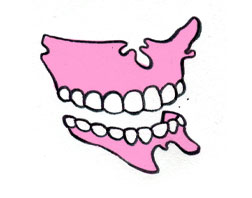
Illustration by Dave Franzese
It's clear that low fees and bothersome paperwork aren't the only reasons dentists avoid Medicaid patients. Letting people with bad teeth, often from lower socioeconomic backgrounds, into their waiting rooms risks upsetting dentists' full-fee patients. But under the current market conditions (undersupply of dentists, high demand for services), it seems unlikely that anything short of a massive influx of funds into the Medicaid system will cause a change of heart. The Children's Health Insurance Program reauthorization that President Barack Obama signed into law on Feb. 4, 2009, may offer some relief. The act made it possible for federally qualified health clinics to contract with private dentists to work in their clinics—so if a dentist's private practice is shuttered on Thursdays, she can work one day per week in a clinic. (Of course, this might well require some infrastructure investment. Clinics' dental chairs are already full during opening hours. Funds from the American Recovery and Reinvestment Act—the stimulus bill provided $2 billion for grants to health centers through 2011—may help.)
The American Dental Association denies that there is a shortage of dentists. To the ADA, the situation is entirely a matter of geographic maldistribution. Since rural or inner-city practices are often not financially viable for dentists, "nonmarket forces," which is to say public or philanthropic programs, are necessary if rural residents are to get even basic dental care. An article in the July 2007 issue of the Journal of the American Dental Association suggested
facilitating the travel of [patients who live in counties without any practicing dentists] to dentists in other counties, facilitating and subsidizing the travel of dentists to counties without a private practice dentist, or subsidizing the incomes of dentists so that their total income is competitive with dentists in other areas.
Many states and universities offer residencies and programs to encourage students to consider rural practices. The Washington State Dental Association, for example, has a program called the Rural Internship in Private Practice, under whose auspices a couple of freshman dental students live and work with rural dentists for two weeks during the summer. They work as dental assistants in the practice, go to Rotary Club meetings and Little League games, and generally get a sense of what it's like to live in a small town.
Rather than tackle the problem with such piecemeal solutions, some experts have suggested that a year of postdoctoral residency training, currently compulsory before full licensure is granted in Delaware and New York, be made mandatory nationwide, with the time being spent working in rural areas, community health clinics, or on Indian reservations. Alternatively, loan-repayment schemes can be made contingent on serving in areas of most need for a set period after graduation. Dr. Marty Lieberman, dental director of Seattle's Neighborcare Health clinics, told me that "for so many of the students I talk to, their big fear is the debt they're coming out with." (The ADA reports that the average education debt for the 2007 class of dental school graduates was $169,902.) The National Health Service Corps does offer loan repayment of up to $50,000 for dentists, dental hygienists, and other providers who serve for two years in areas that suffer a shortage of health or dental health professionals. But Bill Prentice, the ADA's senior vice president for government and public affairs, complains that the government has eliminated many of these slots over the course of the last 30 years: "One of the reasons we see these problems in rural and underserved areas is that the government has dropped the ball."
If dental schools expanded class size or if more new schools were opened, the clinics where third- and fourth-year students receive their clinical training could provide more care to low-income patients. Dr. Gene Beck, who attended the University of Louisville School of Dentistry, recommends that schools make a greater commitment to the local communities. "In urban Louisville, we were surrounded by people who needed us but couldn't afford to pay. It would've been so much better if the state had said, 'No matter what, you need to provide care to these people.' That would've given the students mandatory exposure, rather than those few of us who elected to work in homeless clinics or in the Indian Health Service." The Arizona School of Dentistry and Oral Health at A.T. Still University, which enrolled its first class in 2003, follows a "community-based education model," which focuses on "educating competent, compassionate dentists for underserved communities."
Still, growth is likely to be limited. Dental schools are extremely expensive to operate—mostly because of the costs of running clinics—and they have a hard time attracting faculty. Culturally, dentists tend to be entrepreneurial, independent types, and faculty salaries simply can't keep up with income from private practice. According to the American Dental Education Association, a dental school graduate who had completed a one-year residency and three years of specialty training could expect to be hired as an assistant professor in clinical sciences, where the median total compensation (that is salary, fringe benefits, and earnings from a faculty practice) in 2006 was $114,425 at a public university and $92,632 at a private school. By way of comparison, in 2006 the median net income for a specialist in private practice was $296,640. Currently, 379 faculty positions are open around the nation, and the academic work force is graying.
In most professions there are two simple ways to relieve a short-term shortage: import foreign practitioners and improve productivity. Currently, state dental practice acts prohibit dentists qualified outside the United States from practicing here. These protectionist laws ought to be repealed. In the meantime, some dental schools—notably Tufts and NYU—have developed two-year programs to train foreign dentists. The training costs around $100,000—a worthwhile investment over the long term—but they don't attract enough customers to make much of an impact. Since the ADA, which protects the interests of practicing dentists, won't concede that there is a shortage, it is likely to oppose any significant relaxation of the credentialing rules. Technological developments have improved dental office productivity—digital radiographs, for example, are available much faster than the old-school X-rays that took minutes to develop. But there are physical limits to how much dentists can do. As Dr. Chester Douglass pointed out, "This is micro-surgery. Try doing micro-surgery where you are concerned [with] one-tenth of a millimeter—you can't do it for more than 33 or 35 hours per week."
The most immediate and significant change may come out of a current discussion that is perhaps the most contentious in the dental profession: the debate over "mid-level providers." As with the expansion of care by nurse practitioners in the broader health care field, there is a trend toward training dental hygienists and assistants to perform more duties, especially in underserved areas. The best-known program is Alaska's dental health aide therapist initiative, where, after two years of training, a dental therapist is allowed to perform basic dental procedures like fillings and extractions on Alaska natives. In May 2009, Minnesota passed legislation licensing the occupational categories "dental therapist" and "advanced dental therapist" to perform a variety of tasks—only in underserved areas—under the indirect supervision of a dentist. A dental therapist may apply for licensure after graduating from an undergraduate dental therapy program, and after practicing for at least 2,000 hours is eligible to apply to a two-year master's degree program to receive the advanced qualification. This model has been adopted in many other industrialized countries—most famously New Zealand, where the first group of Alaskan midlevel providers trained. Since one of the obstacles to attracting dentists to rural areas is the social and cultural isolation many experience there, it makes sense to train people who feel at home—who are at home—in those areas to provide some of the necessary skills.
Not surprisingly, the ADA is leery of expanding midlevel providers' roles significantly. Responding to a paper assessing the quality of treatment provided by Alaska's DHATs, Dr. Albert Guay wrote in the November 2008 JADA: "It appears that concerns for the availability of oral health care in remote and frontier areas, have overridden concerns for patient safety." The ADA has proposed its own midlevel provider model: a community dental health coordinator who would promote oral health, provide basic preventive services, help the underserved navigate the health care system, and serve as "patient advocates, facilitators, and motivators." But the coordinator would be prevented from actually poking around in patients' mouths.
One obstacle to empowering midlevel providers is that few people will undergo the necessary training until it is clear that there will be jobs for them after graduation. Norma Wells, an associate professor in the department of Dental Public Health Sciences at the University of Washington, told me that in the early 1970s the state of Washington passed a law that allowed dental hygienists and dental assistants to perform some expanded functions such as removing sutures and inserting materials after a dentist had drilled and prepared filling material. The idea was that with four hands rather than two, the office could take care of more dental needs. But very few dentists were willing to pay more to hygienists to do that advanced work.
Bill Prentice of the ADA thinks the midlevel provider debate is a distraction:
If [policymakers] think there's a cheap solution out there, they'll take it. I think this thought that "if we just pass laws creating these mid-level providers, the access to care problem's going to go away" is a myth. Whether it's for a dental health aide therapist or a dentist—there has to be the funding there to assure that people get care. If you give lawmakers and policy-makers the out, they're less likely to do the hard drudgery of actually finding the money to improve the system overall. We've seen how hard it is to get state legislatures to increase funding for Medicaid. That's hard work. It's much easier to just pass a law creating a new provider and have a press conference announcing you've just solved the problem.
Dentists will point out that although dental costs represent a small percentage of health costs overall, a failure to address dental problems can lead to other health problems that can be very expensive to treat. The Deamonte Driver tragedy is a case in point: Because he couldn't get an $80 tooth extraction, the 12-year-old's treatment—which included emergency brain surgery, two weeks in D.C.'s Children's Hospital, and six weeks of physical and occupational therapy—cost the state of Maryland $250,000. And then Deamonte died. In 2008, an analysis of five years of health claims data performed by the University of Michigan School of Dentistry and the Blue Cross Blue Shield Foundation of Michigan found that for people with diabetes, regular periodontal services could lower overall medical and pharmacy costs by more than 10 percent and that diabetes-related medical costs could be lowered by as much as 19 percent. Perhaps health reform's current focus on containing costs and avoiding wasteful health care spending will end the senseless separation of diseases of the mouth from diseases of the rest of the body.
Or maybe not. A nation that is only now beginning to focus on extending health care to the uninsured is almost certainly decades away from taking the necessary steps to ensure healthy teeth for all.
Correction, Sept. 30, 2009: This piece originally used an inaccurate description of the chart. It shows the overall consumer price index compared to the dental and medical indexes, not inflation rates. We have also corrected the title of the chart. (Return to the corrected sentence.)