“Aardvarks”
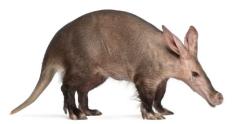
Photograph by iStockphoto.
Click the arrow on the audio player to hear Philip Schultz read this poem. You can also download the recording or subscribe to Slate's Poetry Podcast on iTunes.
It’s summer and the Jitney is packed,
every seat taken, except for the one
across the aisle, in which a man
has barricaded his window seat with
a briefcase and jacket, an act meant
to confront others with his superiority.
Munching chips and guffawing at
a YouTube video of an obese woman
riding a scooter down a country road,
towing a younger obese woman
in a wheelchair, he reminds me
of a neighbor’s dog that would steal
and bury our dog’s bones, then growl
defiantly on his side of our fence.
Pythagoras believed our souls ended up
inside the bodies of animals selected
as rewards and punishments.
The three giggling girls behind me,
stretching their legs into the aisle
every time the shy attendant passes,
forcing him to stutter apologies
in a Slavic accent—poodles, probably.
Pythagoras also believed the shapes
of numbers symbolize our significance.
Well, sequestered here between work
and family, thought and dreaming,
I’m probably some kind of numinous digit
slowly evolving into, say, an aardvark
hurling down the highway inside a bus
camouflaged as a vodka bottle, on its way
to a barricaded future on the far side
of a fence where all our significance is buried.