Keener Sounds
How can poetry that doesn't rhyme be so pleasing to the ear?
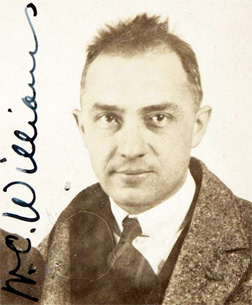
"I only like poems that rhyme." Or, more drastically: "If it doesn't rhyme, it's not a poem." These declarations of allegiance to end-rhyme sound traditional or even daringly reactionary—fearlessly loyal to the past. But what past? Victorian, maybe? Going by the historical record, end-rhyme has been far from essential—at most, it's only one possibility in the art of combining like and unlike sounds. Rhyming at the ends of lines has not always been the historical norm. Far from it.
The Odyssey and the Iliad and the Aeneid, the poems of Pindar, Anacreon, Sappho, Horace, and Catullus, and Martial—that is, all of the Classical works that inspired European poets—are metrical. But none use end rhyme, which played a minimal role in the poetry of ancient Greece and Rome. In keeping with that precedent, some of the most ambitious poetry in English, since before Shakespeare, is not in rhyme but in blank verse: unrhymed iambic pentameter.
Blank verse is the measure of William Shakespeare's plays and of John Milton's Paradise Lost, but that was far from the end of the form. Here are a few blank-verse lines from American poets:
"I shall have more to say when I am dead."
—The final line of " John Brown," poem in blank verse by Edwin Arlington Robinson, one of the best rhymers ever to write in English"She sang beyond the genius of the sea."
—From Wallace Stevens' " The Idea of Order at Key West""This difficult and unaccustomed key."
—From Edna St. Vincent Millay's " Interim""Let cockcrow crown the buttocks of my Pete."
—From "Hypnagogic Automatic Writing Shakespeare Junk," a blank-verse exercise the young Allen Ginsberg set himself, included in his Journals, Mid-Fifties
Robert Frost's "Directive," one of his greatest and most ambitious poems, is in blank verse. For this week's classic-poem discussion, here are two poems gorgeous in sound, without end rhyme: Frost's blank verse "An Old Man's Winter Night" and William Carlos Williams' free verse "To Waken an Old Lady."
Both poems use old age to exemplify something about consciousness itself: that it is only partial, defined by the immense absences that surround it. The ice and snow along the walls of the house, the interrupted nap, contrast with the alert or alerted mind, its conscious waking and keeping. In both poems, sleep and darkness give consciousness a shape and, therefore, meaning. The two poets—more similar, I think, than literary categorizing might make them seem—were both relatively young when they published these poems, in which being old evokes the nature of mind itself: Williams 33 in 1916, Frost 47 in 1921.
In keeping with my technical theme, both poems are rich in like sounds, certainly richer than many a merely competent poem in end rhyme. For example, in the first couple of sentences in Frost's poem, there's an intricate, expressive dance of the consonants and vowels in eyes, gaze, was, and age. In the sentence beginning "A light he was to no one but himself," the phrases with their varying lengths all end with a T sound: sat, what, light, that.
Williams, as it happens, also lets the vowel of age chime with another word: glaze, which has the same end consonant sound as trees. Later, broken shares a vowel with snow and a consonant with covered and seedhusks—well, it's clumsy work, trying to trace these audible subtleties. I'll just point to the beauty of "the flock has rested,/ the snow/ is covered with broken/ seedhusks"—without trying to describe any further what we hear: The hearing itself is an action of consciousness, a kind of awakening and of keeping.
"To Waken an Old Lady"
Old age is
a flight of small
cheeping birds
skimming
bare trees
above a snow glaze.
Gaining and failing
they are buffeted
by a dark wind—
But what?
On harsh weedstalks
the flock has rested,
the snow
is covered with broken
seedhusks
and the wind tempered
by a shrill
piping of plenty.
..................................—William Carlos Williams
Click the arrow on the audio player below to hear Robert Pinsky read "To Waken an Old Lady." You can also download the recording or subscribe to Slate's Poetry Podcast on iTunes.
"An Old Man's Winter Night"
All out‑of‑doors looked darkly in at him
Through the thin frost, almost in separate stars,
That gathers on the pane in empty rooms.
What kept his eyes from giving back the gaze
Was the lamp tilted near them in his hand.
What kept him from remembering what it was
That brought him to that creaking room was age.
He stood with barrels round him—at a loss.
And having scared the cellar under him
In clomping here, he scared it once again
In clomping off—and scared the outer night,
Which has its sounds, familiar, like the roar
Of trees and crack of branches, common things,
But nothing so like beating on a box.
A light he was to no one but himself
Where now he sat, concerned with he knew what,
A quiet light, and then not even that.
He consigned to the moon—such as she was,
So late‑arising—to the broken moon
As better than the sun in any case
For such a charge, his snow upon the roof,
His icicles along the wall to keep;
And slept. The log that shifted with a jolt
Once in the stove, disturbed him and he shifted,
And eased his heavy breathing, but still slept.
One aged man—one man—can't keep a house,
A farm, a countryside, or if he can,
It's thus he does it of a winter night.
..................................—Robert Frost
Click the arrow on the audio player below to hear Robert Pinsky read "An Old Man's Winter Night." You can also download the recording or subscribe to Slate's Poetry Podcast on iTunes.
Slate Poetry Editor Robert Pinsky will be joining in discussion of "To Waken an Old Lady" and "An Old Man's Winter Night" this week. Post your questions and comments on the work, and he'll respond and participate. You can also browse "Fray" discussions of previous classic poems.
Like Slate on Facebook. Follow us on Twitter.