
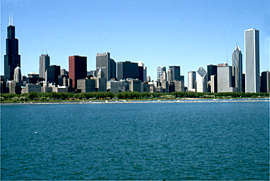
Chicago skyline from Lake Michigan
What A.J. Liebling identified as Chicago's "second city" complex has probably been an urban hang-up since at least 1890, when it overtook Philadelphia in population and went head-to-head, in its own mind, with New York City. Chicagoans regularly vent their insecurity in relation to City No. 1 by boasting that they have the best--and here you can fill in the blank--symphony, opera, theater, restaurants, sports teams, or political corruption. The saddest commentary on these claims is that you can live for years in New York without hearing anyone compare anything to Chicago's version. Curiously, though, there is one topic about which you seldom hear Chicago locals touting their superiority: architecture.
The reason may be that in architecture Chicago is confidently arrogant. Everyone in New York knows that Chicago has better skyscrapers. Everyone in Chicago knows, too. Civic pride is wrapped up in the majesty of the lake-front skyline and the height of its giants. The average citizen has strong feelings about the more famous buildings and may even know something about them. Having grown up in Chicago, I've often wondered how it became the great American architectural city--and why the whole topic is so much deader in New York. With an eye to figuring this out, I took a tour of downtown with a couple of architectural historians: Tim Samuelson of the Chicago Historical Society and Rolf Achilles, who teaches at the School of the Art Institute of Chicago. I'm indebted to them for much of the information in this column.
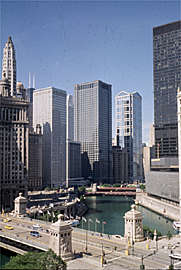
Chicago River at N. Michigan Avenue
Photographs by Rolf Achilles


