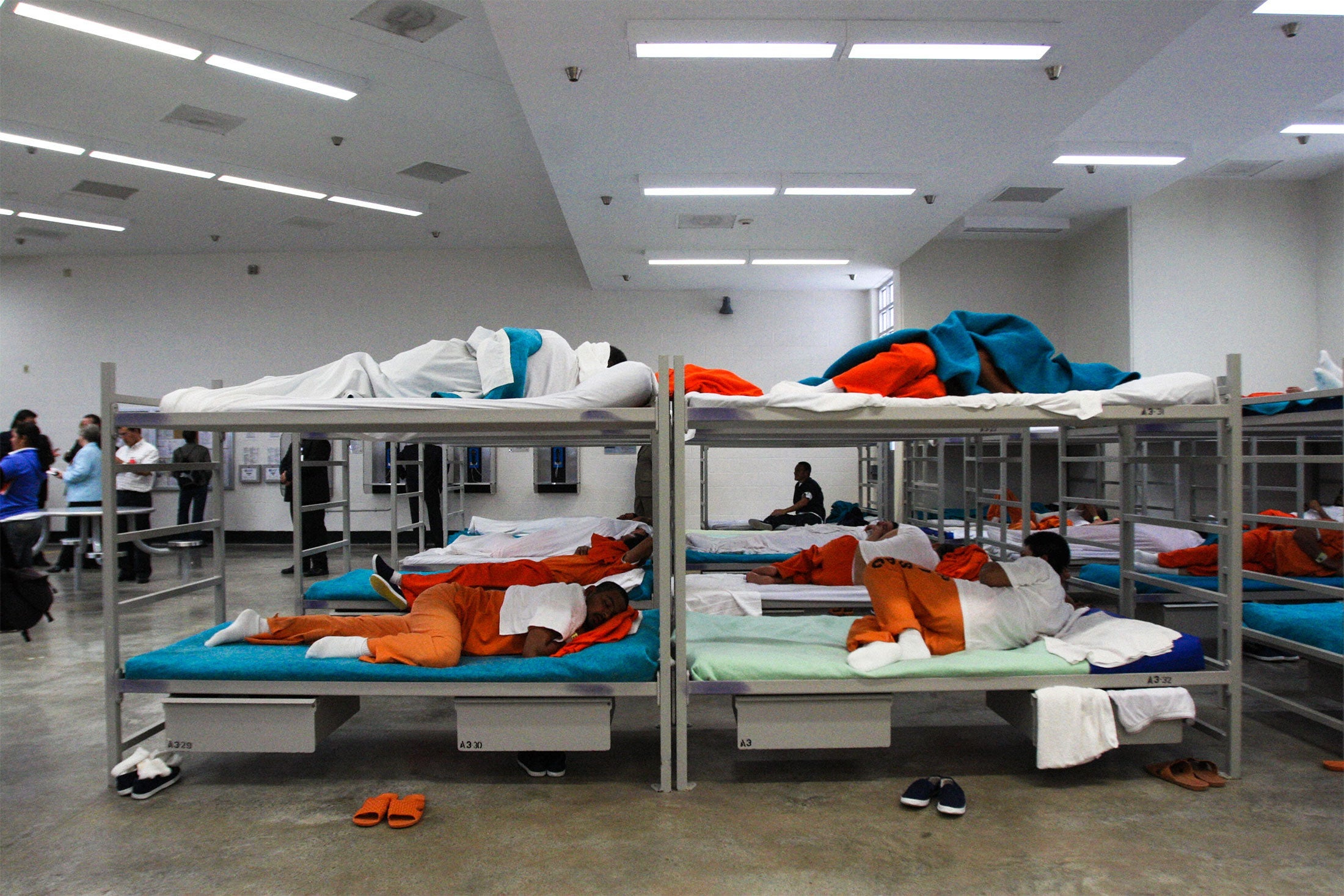
CIA interrogators at Guantanamo Bay subjected dozens of detainees to sleep deprivation, shackling the prisoners in a standing position for up to 11 days at a time. Recently released Justice Department memorandums claim sleep deprivation studies show that “surprisingly, little seem[s] to go wrong with the subjects physically.” Wait, is it really safe to go without sleep?
No—extended bouts of sleeplessness can cause an array of physical symptoms and might eventually kill you. The effects begin within the first 24 hours of sleep deprivation. First, the body undergoes subtle hormonal changes—cortisol and TSH levels increase, leading to a rise in blood pressure. A day or two later, it stops metabolizing glucose properly, creating carbohydrate cravings. (This phenomenon may have gone unnoticed among the detainees, who were already on a calorie-restricted diet.) A person’s body temperature will also drop, and his or her immune response becomes somewhat suppressed. All of these physiological changes are reversible, though—take a nap, and you’ll be on the road back to normal.
It’s possible that given enough time, sleep deprivation can kill you. While no human being is known to have died from staying awake, animal research strongly suggests it could happen. In the 1980s, a University of Chicago researcher named Allan Rechtschaffen conducted a series of groundbreaking experiments on rats. After 32 days of total sleep deprivation, all the rats were dead. Curiously, researchers still do not agree on the cause of death. It’s possible that the rats’ body temperature dropped so much that they succumbed to hypothermia. Another theory posits that the rats’ immune systems became so depressed that bacteria normally sequestered in their intestines spread throughout their bodies—though Rechtschaffen counters that his rats perished even when they were administered antibiotics. A third explanation points to some evidence of brain damage among the sleep-deprived rats. It’s also possible that extreme levels of stress contributed to the rats’ demise.
There’s every reason to believe that humans would experience the same end result if they were kept awake for long enough. Our knowledge of prolonged, complete sleep deprivation in humans is limited because intolerable psychological effects such as hallucination and paranoia take hold long before the more severe physical symptoms. Most human studies involve no more than two to three days of complete deprivation or a week of partial sleep deficits. Data on more prolonged sleep deprivation come from anecdotes, animal research, or surveys of chronically sleep-deprived groups like medical residents.
Got a question about today’s news? Ask the Explainer.
Explainer thanks Charles A. Czeisler of Harvard Medical School and Brigham and Women’s Hospital, James B. Maas of Cornell University, Amita Sehgal of the University of Pennsylvania, and Jerry Siegel of UCLA.
