The most famous card in the history of pictures on cardboard is the T206 Honus Wagner, so rare that one of them sold for more than $2 million last year. The most well-known card of the modern era is the 1989 Upper Deck Ken Griffey Jr., the No. 1 card in the company’s inaugural set. As Griffey nears the 600-home-run landmark, sales of the Upper Deck No. 1 are as brisk as always, with buyers snapping up a couple of dozen every day on eBay at prices ranging from $15 to $300. These two cards, the bookends of the collecting phenomenon, are exact opposites. The Wagner is the white whale of the card trade: elusive, highly coveted, and known to drive men to madness. The Griffey is the childhood lust object that everyone’s mother saved, arguably the most popular, most widely held baseball card of all time.
When Griffey welcomed collectors to the very first Upper Deck set, investment was just about to trump fun in the card world. Kids had started putting their collections in plastic sheets and hard cases rather than bicycle spokes and shoe boxes, and investors would cross-check every card picked from a pack against the latest issue of Beckett’s price guide. It was in this environment that Upper Deck launched in 1989 as the first premium baseball card, protected from the threat of counterfeiting with a hologram on each card, protected from the stain of the wax pack thanks to its unprecedented foil wrappers. There was no gum included, and packs cost an industry-high $1. Baseball cards were serious business.
The Griffey card was the perfect piece of memorabilia at the perfect time. The number the card was given only furthered the prospect of his cardboard IPO. Junior was chosen to be card No. 1 by an Upper Deck employee named Tom Geideman, a college student known for his keen eye for talent. Geideman earned his rep by consistently clueing in the founders of The Upper Deck, the card shop where the business was hatched, on which players would be future stars. Geideman took the task of naming the player for the first card very seriously. Using an issue of Baseball America as his guide, Geideman knew that card No. 1 would belong to Gregg Jefferies, Sandy Alomar Jr., Gary Sheffield, or a long-shot candidate, the phenom they called “The Kid.” It’s probably the most thinking Geideman ever did compiling a checklist, save for the 1992 Upper Deck set when he assigned numbers that ended in 69 to players with porn-star-sounding names. (Dick Schofield at No. 269, Heathcliff Slocumb at No. 569, and Dickie Thon at No. 769.)
Despite the fact that Griffey had yet to crack the majors, Geideman had the confidence that the top pick in the 1987 draft would live up to his pedigree. It goes without saying that this was a genius selection. You could imagine how the people at Topps felt when Junior became an instant superstar—and they hadn’t even included him in their 792-card set.
From the very beginning, card buffs saw the Upper Deck No. 1 as not just a collectible, but as an investment. Baseball card fans, who had once traded away duplicate cards in a quest to compile a complete set, started hoarding as many Griffeys as they could. Collectors’ hands would shake when they saw Griffey’s face in their pack, confident that this card would be the key to financing a college education.
But the truth was that even though Upper Deck printed fewer cards than its contemporaries—Donruss, Fleer, Topps, and Score—in this case, supply came close to meeting demand. Today, many people face the reality of unloading their Griffeys at a heavy discount on eBay. On May 4, for example, you could find two people selling two separate lots of 11 Upper Deck card No. 1s. One guy was selling a lot of 26, which eventually went for $760.
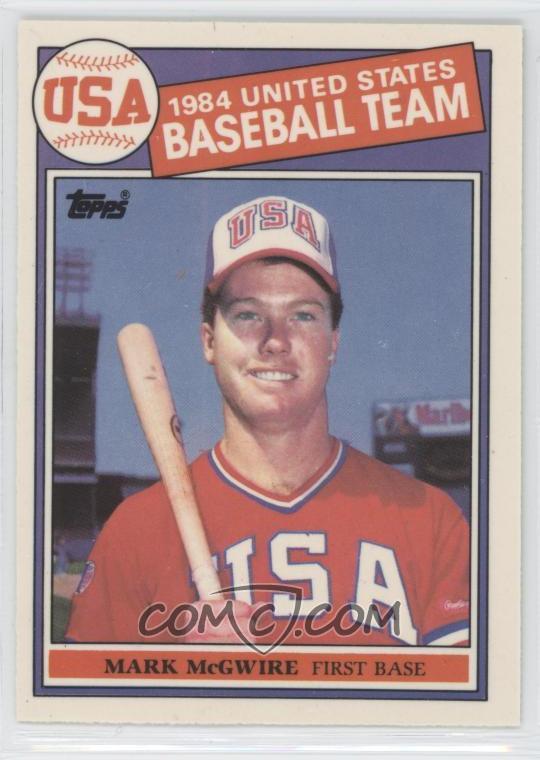
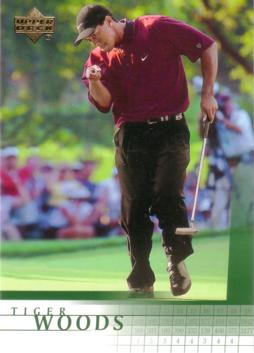
It comes as no surprise that the Griffey card is the most-graded piece of cardboard in the history of the hobby. (Card grading, if you’re unaware, is done by services that slap a card in between plastic and evaluate exactly how pristine it really is.) Professional Sports Authenticator has graded 51,800 Griffeys, while Beckett has graded about 25,400. (PSA’s second-place card is the 1985 Topps Mark McGwire Olympic rookie card, with 46,000 grades. Beckett’s No. 2 is the 2001 Upper Deck Tiger Woods card, which has been graded about 21,500 times.)
A Griffey that was graded a perfect 10 once sold for north of $1,000. Now it would go for closer to $275. “Raw,” ungraded Griffeys sell for $15 to $50. (By comparison, Donruss and Fleer versions of the Griffey rookie, from graded to ungraded, usually range in price from $1 to $20.)
Despite Griffey’s illustrious career—some might call it disappointing relative to all the hype—it’s amazing that the card could even command a couple hundred bucks, given how common it is and how many of them seem to be in great condition.
More than 1 million Griffey cards were printed. In Upper Deck’s original mailing to dealers, the company said it would sell 65,000 cases of card packs. With 20 boxes in a case, 520 cards in a box, and 700 different cards in the set, there would be about 965,000 of each card produced for the boxes. Combine that number with the amount of Griffeys in the untold number of “factory sets,” and you’d have your production run.
Given the number of Griffey cards in circulation, there have long been rumors of an illicit reason for the card’s ubiquity. Upper Deck, the legend goes, knew that printing the cards was just like printing money. As such, there was a sheet the company could run with 100 Griffey cards on it, instead of the standard sheet that had just one Griffey in the top corner along with 99 pictures of other players.
“If that existed, I never saw it,” says Buzz Rasmussen, Upper Deck’s plant manager at the time. Rob Veres of Burbank Sportscards, a memorabilia dealership with a warehouse of 30 million cards, says that if Griffeys were produced in greater quantity than other cards, he would’ve expected to come across larger collections of the card.
If there was no funny business, why are the Griffey cards so abundant? The most natural explanation is that more were saved. Figure that about 95 percent of Frank DiPinos, Henry Cottos, and Steve Lombardozzis have hit the garbage can, while a huge percentage of the Griffeys have survived. Some dealers also swore to me that, although Upper Deck claims its packs were sequenced randomly, there was in fact a predictable pattern in the company’s boxes that became valuable to learn. Therefore, the unopened Upper Deck packs that remain are less likely to have Griffey cards stashed inside them.
There’s one more reason for the Griffey profusion. While the card might not have received an extra production run, there was extra attention paid to its condition coming out of packs and factory sets. Because the Griffey was card No. 1, it resided in the upper-left-hand corner of the printing sheet. It was therefore more susceptible to miscuts and corner bends. Being the first card in the factory set also turned some of the Griffeys blue, the color of the box.
Card collectors and dealers who received less-than-perfect Griffeys would write in to complain to Upper Deck. The nascent company—surely understanding that its products would be seen as investments—couldn’t afford any bad PR at that early stage. According to Jay McCracken, then the company’s vice president of marketing and sales, the customer service desk was the place to find stacks of new Griffeys. The company was more than happy to exchange the bad card for a pristine one to keep its customers happy. That came in handy a decade later when the value of a Griffey would be determined by the card graders.
When Griffey hits home run No. 600, don’t look for the value of Upper Deck No. 1 to skyrocket. After all, there’s likely a card in circulation for every person living in the city centers of Cincinnati and Seattle. That sheer quantity, though, does mean that the lasting image of Ken Griffey Jr. won’t be anything he does on the baseball field. It will be a picture of an overjoyed teenager in an airbrushed Mariners hat.