Given how fiercely cultural conservatives defend the importance of a single “Western canon,” it is more than a little ironic that different parts of the West have such different versions of it. True, the canon everywhere tends to start with the same Greeks and Romans, but thereafter, things get trickier. Consider, for instance, what competing accounts of “Western” philosophy and literature say about the 19th century. Where the French highlight Auguste Comte and Victor Hugo, the British give pride of place to John Stuart Mill and Charles Dickens, while Germans speak of the age of Hegel and Goethe. The multinational canon that dominates survey courses at universities like Columbia and the University of Chicago is actually a peculiarly American phenomenon.
When it comes to canonical works of history writing, national differences are all the more striking. Before the 18th century, nearly all historians wrote exclusively about their own countries, and in most of the world, most of them still do (America, with its immigrant heritage and global reach, is again an exception to the nationalist rule). So not surprisingly, when looking back on the “history of history,” German historians loom largest for the Germans, French ones for the French, and so on.
In his whimsically titled A History of Histories, British historian John Burrow seems at first to avoid this tendency. He offers the book as a survey of history writing in general, or at least the part of it that falls into the “European cultural tradition.” He starts with Herodotus, dwells lovingly on Thucydides and the Romans, and only gets to his first British subject (a sixth-century monk named Gildas) on Page 175. In his sections on the 19th century, he gives ample space to the German school and an entire chapter to the United States. Yet in the end, the book still shows just how hard it is to think about history outside a particular national framework.
For one thing, Burrow’s gestures toward the world beyond Dover go only so far. His chapter on the Enlightenment looks almost exclusively at British historians, despite the significance of continental contemporaries like Voltaire. Moving on to the 19th century, the book has almost as much on the eccentric if brilliant Thomas Carlyle as on Jules Michelet, Leopold von Ranke, and Jacob Burckhardt—three giants of historical scholarship—combined. Burrow gives extensive treatment to Victorian medievalist William Stubbs, a hero mostly to his own countrymen, while barely mentioning France’s Marc Bloch, perhaps the most admired medievalist of modern times. Taken individually, any of these decisions are defensible. Put together, they emit a strong whiff of “Fog in Channel; Continent Cut Off.”
More broadly, the themes that Burrow sees as central to his story are often peculiarly British ones. The British are not the only people to have seen history as the “story of freedom,” but they are the ones who have most closely identified this story with the progress of parliamentary institutions. Burrow gives a chapter and a half to parliament-centric “Whig History,” while disposing in a brisk seven pages of France’s influential “Annales school” (co-founded by Bloch), which sought to place social history at the heart of the discipline.
Burrow’s perspective is not just British, but a very old-fashioned sort of British. In his account, women do not have much of a place in history, either as its writers or its subjects. He gives no more than a few lines to any female historian, and dismisses all of gender history in (literally) two words. Nonwhites get similarly egregious neglect, as does the whole vast subject of the history of slavery, race relations, and genocide. (Jewish history, meanwhile, seems to end with Josephus.) You don’t have to worship at the shrine of political correctness to look aghast at this shrinking of the “European cultural tradition” to stories of white men told by the same. At the conclusion of his book, Burrow hails the men he has written about, in Burkean tones, as “a kind of community of the dead and the living.” In his pages, it often looks more like a kind of exclusive British club.
This narrowness is a pity, because within its bounds, Burrow has written a lucid, enjoyable survey that achieves miracles of concise summary. He is particularly good on the ancients, whom he plausibly credits with inventing most of the worthwhile elements of the historian’s art, beginning with rigorous standards for weighing the reliability of evidence and for determining cause and effect. He also points out that despite writing mostly about wars fought by their own societies, ancient historians had a sustained interest in the diversity of human customs and beliefs that anticipates the ethnographic turn taken by modern social history. Here, Burrow’s arguments are provocative and acute.
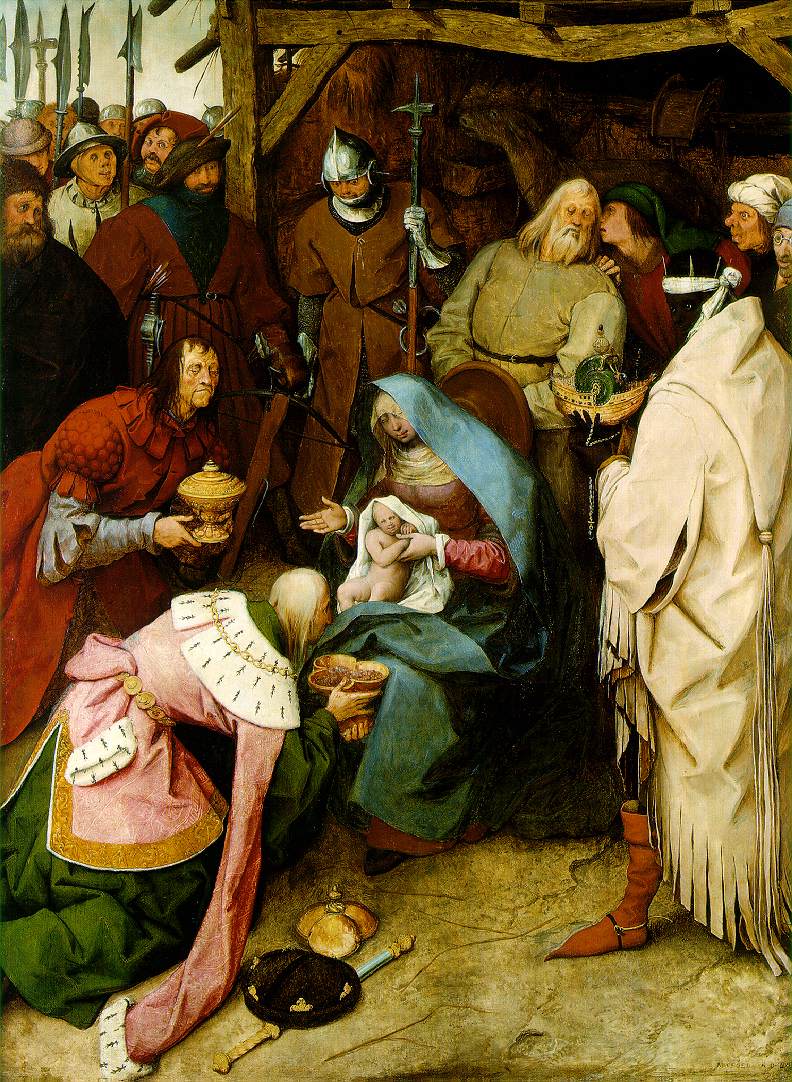
Yet this very willingness to embrace Herodotus and Thucydides as colleagues—almost as compatriots—leads Burrow to play down one of the most important contrasts between classical and modern history writing: namely, the modern sense of the strangeness of the past. While ancient historians could certainly discern long-term changes (for instance, the decline of Roman virtue lamented by Livy), they did not see fundamental differences between patterns of thought and behavior in successive epochs. In the medieval and early modern worlds, historians and nonhistorians alike continued to collapse different epochs—think of the way that artists portrayed biblical figures in costumes of their own times (as in Pieter Bruegel’s Adoration of the Magi).
The modern consciousness of historical difference began with Renaissance advances in textual analysis, which allowed scholars to see how differently classical authors had approached issues of law and custom. It grew during the 19th century, when self-proclaimed “historicists” heavily inspired by G.W.F. Hegel insisted that particular historical contexts can give radically different forms to a society’s mental structures at different moments in time. More recently, historically minded post-structuralist philosophers like Michel Foucault have even argued that systems of thought in different periods can be radically incommensurable.
Today, much of the best history-writing bears the influence of this tradition. It starts from the premise that what one society regards as normal, “natural,” and “human” may strike another as arbitrary, bizarre, and perhaps even unintelligible. Intimate attitudes toward the body, sexual practices, definitions of madness and criminality—all of these things have their own, often surprisingly discontinuous, histories. A good deal of modern scholarship, for instance, has shown that modern racism, with its assumption of vast, biologically grounded differences between races, took shape over a matter of decades, in the late 18th and early 19th centuries. The most potent resistance to historicist ideas has come from nationalism and the belief that cultural and/or genetic continuity trumps chronological change. Few Western historians still have overt nationalist agendas, but the unquenchable public appetite for stories of past national glories (something particularly strong in the United States, as HBO’s John Adams has shown yet again) pushes scholarship subtly back in this direction.
Though Burrow’s Anglocentrism hardly qualifies as stridently nationalist, his vision of a “community of the dead and the living” is not one that allows much room for consideration of these issues. He acknowledges the significance of Renaissance scholarship, but flits inconsequentially over historicism, and pays more attention to the ways that 19th-century Germans professionalized the discipline than to the ideas they developed. As for the post-structuralists, he barely even mentions them, except insofar as they have contributed to the demolition of “Whig History.” Throughout the book, his emphasis on the bonds among historians across time (facilitated by the Anglocentrism) keeps him from drawing significant connections between historians and the philosophy of their day.
Yet these connections, if not always obvious, are usually profound. Historians, like all practitioners of the human sciences, operate with a particular idea of what makes human beings tick—of how the mind works. You cannot really understand their writing unless you have a sense of how they understand the mind itself—in other words, their psychology and philosophy, which are things that change over time. A writer like Burrow, who sometimes seems to see Thucydides and Xenophon as modern Englishmen born by odd happenstance into ancient Greece (he refers to the latter as a member of the “Athenian gentry … a country gentleman”), is almost certain to resist sticking more than a toe into these deep waters.
Of course, those who study a canon, like nationalists, will always stress continuities across history rather than the gulfs that separate us from the past. It’s a worthwhile perspective but one that can easily be taken too far. For if we fail to pay due attention to the profound and surprising ways that patterns of thought can change, our canon will all too easily end up becoming a mirror.