Forget the Democrats and the Republicans: The country’s sternest line may be the one between readers of fiction and nonfiction. How rarely they overlap! To fiction devotees, the other side lacks soul and imagination; to the nonfiction faction, fiction is frivolous and, worse, fake—stuff the writer made up. And nonfiction preferences hold sway even within fiction. Novelists can’t just make up stuff at will; they’re expected to obey the rules of what’s called the Real World. If they don’t, they risk getting bundled off onto the genre shelves. The truer a story is, the more respectable somehow: A novel about a lawyer getting a divorce beats one about a wizard battling a demon.
Science fiction and fantasy have never been fully respectable in the world of books, however happy we may be to let them entertain us at the movies. Every so often, though, readers will rebel, buying enough copies of a work of unrealism to make publishers pay attention. In the 1970s it was Tolkien; in the 1990s it was the cyberpunks. Today, of course, it’s Harry Potter, the world’s most special everyboy with a foot in our world and a 7-league-boot in the world of magic.
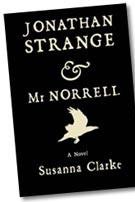
Now Bloomsbury, the people who brought the world the boy wizard, are offering Susanna Clarke’s Jonathan Strange and Mr. Norrell, which they hope we’ll buy as Harry Potter for adults. With all the hype, it’s tempting to dismiss Clarke’s novel as a mere knockoff, but it’s the real thing: original, mesmerizing, with uncompromising literary integrity. (The Booker Prize committee seems to agree: It’s on its long list.) According to Clarke’s conceit, in the early 19th-century Britain where she sets her novel, magic is a gentlemanly profession like medicine, the army, the church, or collecting butterflies. For a long time, however, magic has been a purely historical pursuit: It’s been centuries since Englishmen actually consorted with fairies and cast spells. Now a magician, Mr. Norrell, has shocked his theoretical colleagues by making statues speak and resurrecting a dead lady. Unfortunately, the ambitious Mr. Norrell seethes with professional jealousy. When another talented practical magician, Jonathan Strange, shows up hoping for his patronage, a bitter rivalry seems as likely as an alliance. The deep and troubled connection between the two men deepens the story, which in the end has a lot more in common with a series of historical novels—Patrick O’Brian’s seafaring books—than it does with Harry Potter. Both Clarke’s and O’Brian’s stories are about a complicated relationship between two men bound together by their profession; both are set during the Napoleonic wars; and they share a dry, melancholy wit and unconventional narrative shape. This may seem odd, since on the surface, fantasy and historical fiction (like O’Brian’s books) look like polar opposites. Fantasy eliminates constraints, breaking the laws of nature right and left, while historical fiction adds them, forcing the writer to take into account actual events and characters. But the truth is that unless magic follows rules of its own, a fantasy degenerates into the and-then-and-then-and-then arbitrariness of a 3-year-old telling herself a story.
Unlike Tolkien and to some extent Rowling, Clarke isn’t interested in dark lords and good versus evil per se. For her, the dichotomy is between madness and reason, or perhaps between human beings, who believe in right and wrong, and nonhumans (animals? immortals?), who just don’t get the distinction. She chooses as her period the beginning of the 19th century, when literature began to look inward, opening its eyes to psychology. Magic in fiction has often stood in for psychological or neurological states—anyone who’s experienced a major depression knows exactly what Harry Potter and friends felt like in the presence of J.K. Rowling’s Dementors, while Alice’s experiences in Wonderland rang true for a whole generation of acid-heads. In Clarke’s world, all magical power is ultimately derived from fairyland—not the sugar-and-flowers fairyland of greeting cards, but the spooky, amoral world of pagan folklore. She draws explicit links between this fairy world and psychosis. Aside from certain magicians, only madmen can see fairies. When they do, the world goes weird and dark, evoking bad drug trips, paranoid delusions, and the creepier gothic and Romantic writers of the period.
It’s possible, of course, to evoke these things straightforwardly; Nonfiction and realistic fiction writers from Thomas de Quincey to Kay Redfield and from Sylvia Plath to Susanna Kaysan have taken us into that dark world. But for exploring its delicate, indecent fairy-tale soul, there’s nothing like fiction.
