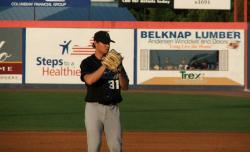
In one of America’s most fabled industries, there’s a hidden underclass of workers that has a starting salary of $1,100 a month and gets paid for only half the year. They are subject to territorial monopolies, restrictions on labor movement, and caps on salaries that are illegal in other businesses. Though not members of a union, their lives are influenced by one of the most powerful labor associations in the country, a group whose members—people who work in the same industry for the same organizations and were once in the same position—have a vested interest in keeping them down. They are minor-league baseball players.
With this baseball season comes a new collective bargaining agreement, negotiated by Major League Baseball’s owners and players association this offseason. As it usually does, the MLBPA secured a minimum wage increase; by 2014, the lowliest major leaguer will earn at least half a million dollars. But the labor deal also sets new limits on the bonuses paid in the amateur draft, which the players’ union gets to negotiate even though they don’t represent draftees. Indeed, today’s major leaguers rarely hesitate to sell out their eventual replacements: In the agreement that took hold in 2007, the players signed off on a change that kept minor leaguers out of free agency for an extra year. Gene Orza, who recently retired as the MLBPA’s No. 2 lawyer, says there’s nothing wrong with that. “We don’t represent them,” Orza told me, referring to minor leaguers, “and have no obligation.”
Orza is right: The only obligation the MLBPA has is to its actual members. As J. Gordon Hylton, an expert on the legal history of baseball, explained to me, there is a “growing awareness on the part of established baseball players that we don’t want to make the entry-level arrangement too good, because that’s money that might be going to mid-level or low-level [major-league] players.” With no one to represent the rookies, the money will always flow in one direction. That is, unless some underpaid minor leaguer takes it upon himself to become the César Chávez of baseball.
The last player to talk seriously about minor-league unionization was Garrett Broshuis. In 2006, Broshuis was playing for the Connecticut Defenders, the AA affiliate of the San Francisco Giants. The pitcher, who was sharing an apartment with some teammates in a bad neighborhood in Norwich, Conn., got radicalized after an upstairs toilet clogged and flooded the place. “That was kind of the moment where I realized this isn’t really fair,” he remembers. “It’s not fair that I’m playing in front of seven or 8,000 people each night and making pennies.”
Broshuis started a Facebook group for minor leaguers to talk about their low wages and shabby treatment. It flopped. Then he read a self-published book by a labor lawyer named Don Wollett. In Wollett, he found a rare soul who thought a minor-league union was possible. “From talking to him you get kind of optimistic that maybe someone from the outside will want to help us,” Broshuis recalls.
In his book Getting on Base, Wollett argues that a large union—the Teamsters, for example—could organize the minors, and that such a transaction is the only way to keep baseball healthy. His book brims with a fan’s outrage. He is critical of what he sees as overpayment of stars, and believes that a flatter pay scale would benefit the game. Mostly, though, he sees injustice: Young baseball players are being exploited and nobody is doing anything about it.
Even with Wollett’s arguments and support, it didn’t take long for Broshuis’ optimism to fade. He realized that, with so little money at stake in the minors, there was no incentive—righteous outrage aside—for some parent union to swoop in and organize his brethren. So Broshuis, like every wannabe minor-league union organizer before him, gave up. He quit the game and became a law student. “It’s a hard thing to swallow to know that the things around you that aren’t quite right just aren’t going to be changed,” he says.
Gene Orza, who came to the MLBPA from the National Labor Relations Board, agrees with Broshuis on two counts: Unionization could help minor-leaguers fight back, and it’s very unlikely to happen. Among the many obstacles Orza cites is that nobody wants to be a minor-league ballplayer for long. Young players are unlikely to make noise while they’re trying to get promoted—they “don’t want to tick off [the club] by being the person who forms the union,” in Orza’s words.
Marvin Miller, the man who built the MLBPA into the powerhouse that it is today starting in the 1960s, agrees with Orza’s assessment. The 94-year-old Miller told me that he contemplated bringing the minors into the fold to begin with and revisited the issue several times over the years. The appeal of unionizing every pro baseball player, though, was always outweighed by a lack of resources, the geographic decentralization of the minors, and the dreamy idealism of the players. “The notion that these very young, inexperienced people were going to defy the owners, when they had stars in their eyes about making it to the major leagues—it’s just not going to happen,” Miller says.
The MLBPA’s pioneers had to overcome a similar fear of management backlash, but big leaguers at least had a lot to gain from unionization—a lot of money, that is, and leverage over the owners. Minor leaguers have less to gain and more to lose. With nobody even willing to question the game’s meager wages, who would dare go further?
Wollett, who is 92 years old and disabled, is the only person left who’s pushing for a minor-league union. Though he can’t get around anymore, his thoughts are clear. Like the minor leaguers who put up with poverty because of the potential to make the big leagues, Wollett thinks there’s something special about the dream of baseball. But he thinks that specialness means it’s even more important to have a union. “It’s a game we love and revere,” he said, “but we tolerate injustice to our minor leaguers.”
Wollett says players are ready to organize, that “they’re like a ripe plum,” ready for the right person “simply to pick off.” He says he sees signs—the Occupy movement, for example—that now may be the time. He’s just too old to do anything about it himself.
There are reasonable arguments against minor-league unionization. For one thing, all that cheap labor allows teams to spring up around the country. With a union, there might be less baseball and fewer roster spots for players on the game’s fringes.
On the other hand, hundreds of players like Garrett Broshuis have to choose between taking a chance on baseball and launching a more remunerative career. Though top amateur players like Bryce Harper get multi-million-dollar signing bonuses, hundreds of draftees per year get no more than $1,000 when they sign their pro contracts.
Jim Bouton, whose 1970 memoir Ball Four was admitted as evidence of mistreatment of players at the 1975 hearings that ended the reserve clause, says this is just capitalism at work. “[Minor leaguers] bargain for their talent in a free market like everybody else does,” he says. If you’re a believer in laissez-faire capitalism, you can argue there’s no such thing as an unfair salary in baseball. Although Bouton admits that many young players get remarkably low wages, “they don’t have to accept the team that drafted them. They can continue playing amateur baseball; they can go back to college.”
In other words, they can choose not to be pro baseball players because pro baseball players don’t get paid enough. For the ones with little talent, perhaps it’s best that they drop out of the game early and get started on another career. For the ones at the top, this is just a fleeting hardship. But the players in the middle, those who just might be good enough, are stuck with the sports world equivalent of an unpaid internship. Just as a college student’s ability to afford a paycheck-free summer is not an accurate predictor of whether she could be successful in a particular industry, a young man’s willingness to accept less than a living wage is not an accurate predictor of whether he could become a major-league second baseman. And many of those potential players drop out before they know the answer to that question.

Photo courtesy Lily Rothman
But there will always be players like Tom Zebroski, a 45th-round draft pick by the Kansas City Royals in 2010. As a first-year player, he made $1,100 a month before taxes, and his bonus wasn’t any bigger. Zebroski had promised himself he would never play in an independent league, with no direct route to the big leagues and even less money than you get in the minors. But when he got released by the Royals last year, Zebroski changed his mind. He decided to work in the offseason to save up for the chance to have a chance. “It’s one of those things that, if you give it up before you’re ready to, you’ll be questioning yourself,” he says. “Like, what if I’d done this, what if I’d done that, what if I’d given it one more year?” He now plays for the Traverse City Beach Bums in the Frontier League, where the salary cap is $75,000 per team and the minimum salary is $600 a month.
Baseball is the losingest game around: Getting a hit one-third of the time takes great skill. Even so, every batter believes he’ll connect. Holding onto baseball means believing that you can beat the odds. It means believing you don’t need a union.
“Every single player you talk to, even if they realize [a union] would be a good thing, is also scared to death to talk to another player about it,” Garrett Broshuis told me. “This is your dream you’re talking about.”
