What’s the difference between a risk and a gamble? You can rescue yourself from a risk. If a gamble goes wrong, the consequences are irrevocable. I first learned this distinction from a battalion commander who had served several tours in Afghanistan. I interviewed him for a series of articles I wrote about risk. The lesson is now playing out in the pitched battle over the firing of Teresa Sullivan, the University of Virginia’s president, whose pursuers completely ignored this distinction even though they imagined themselves to be brave risk-takers.
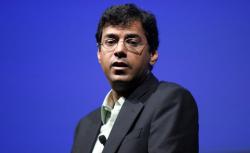
The central risk taker in the story is Helen Dragas, the rector of the university who orchestrated the plot to unseat Sullivan. Days before she pushed Sullivan out, she emailed her co-conspirator Mark Kington a transcript of a commencement address delivered at Williams College by the New Yorker’s Atul Gawande on risk, failure, and recovering from failure. His thesis is that while commencement speakers talk about risk, they never offer the key to risk-taking, which is knowing how to rescue yourself when your risk goes wrong. That is a key insight and a gift to the students. People are always going on about how we need to take risks, but they never explain how exactly one goes about it. Gawande was unwinding the mystery a little and giving the students something extremely useful.
We don’t know exactly why Dragas, a successful Virginia Beach real estate developer, sent a transcript of that speech. She just wrote to Kington, the vice-rector and a successful businessman in his own right, that it was “timely.” She very likely was using its argument to validate her push for a post-Sullivan public relations plan that she had put in place. In a collection of emails—obtained in a Freedom of Information Act request by the student newspaper, the Cavalier Daily— Dragas and Kington discuss using an outside firm to address the blowback. (An aside: This drama, with uncovered emails, secret plans exposed, and J.K. Rowling-esque names is really only lacking a passion subplot. In the movie version, someone somewhere is going to be getting at least a canoodle.)
Gawande is a brilliant, lucid, and enjoyable writer. And what a multitasker! (Surgeon and writer; I can barely keep up with the laundry and meet my deadlines.) But the story he tells about risk-taking is imperfect. Gawande tells the story of a fluke surgical crisis. An 87-year-old woman who entered the hospital to have her carotid artery unblocked survived the surgery but then developed gastric volvulus, a very serious condition. The team of doctors was able to solve the problem because they were prepared and calm in the face of chaos. It is imperfect because while the surgeons showed two traits crucial to risk-taking—preparation and calm—the emergency condition they were facing was not the result of their own risk-taking. It was a fluke.
Since the surgeons were not the agents of the chaos, they didn’t have to deal with the normal failure cycle risk-takers have to manage: the constant retracing of steps, the loss of confidence (if I screwed up taking the risk, why won’t I screw up trying to solve it?), and the refusal to admit that your first risk-taking action was a mistake. The surgeons in Gawande’s story are open to alternative diagnosis to solve the mysterious second illness, which is a good trait, but it’s not the same as knowing how to unlock yourself from the entrenched defense of your original risk-taking decision.
What we know for sure is that Dragas and Kington did not get the central message of Gawande’s address to the graduating class at Williams College. Gawande concluded by saying:
So you will take risks, and you will have failures. But it’s what happens afterward that is defining. A failure often does not have to be a failure at all. However, you have to be ready for it—will you admit when things go wrong? Will you take steps to set them right?—because the difference between triumph and defeat, you’ll find, isn’t about willingness to take risks. It’s about mastery of rescue.
If there’s one thing that everyone can agree on, it’s that Dragas, Kington, and their anti-Sullivan cabal blew the rescue. They stood up in the lifeboat, they threw gas on the fire, they put the oxygen mask on the child first, and forgot themselves.
Sullivan was very popular. That meant she had a big constituency. Furthermore, she had served only two years. Her short tenure makes it hard to claim that she lacked the skills to get the job done when the same board had so recently hired her. If anything, she hadn’t been given sufficient time even to be evaluated.
There was a massive outcry when the news hit that Sullivan was leaving. (I too cried out. I sat next to Sullivan at an alumni event. I thought she was spectacular.) Alumni were asked to send their opinions by email, which nearly melted the servers. Everyone may have loved Sullivan, or they may have just been reacting to the clumsy and offensive way her firing was handled.
Other voices have weighed in. Sullivan’s predecessor, John Casteen, called for her reinstatement. So did the former Gov. Tim Kaine, who is running for the Senate. Gov. Bob McDonnell said the board had mishandled the whole business. The faculty passed a vote of no confidence in the Board of Visitors. A senior faculty member resigned, saying he didn’t want to be associated with a school headed into the abyss. The American Association of University Professors wrote to the board, urging it to reconsider. The Cavalier Daily called on the whole board to resign.
In the aftermath, the board, led by Dragas—which I swear is the name of a teacher of the Dark Arts in Harry Potter 8—was obscure, shifty, and defiant in the face of questions about what had led to the surprise firing. Dragas published a statement that was as serpentine as Mr. Jefferson’s famous walls. It alternated between jargon, ass-covering, self-congratulation, and faux sympathy. She answered none of the pertinent questions related to Sullivan’s ouster while declaring that any turmoil over how she had been fired stemmed from the board’s excessive attachment to the “truth.” A later statement from Dragas outlined some of the challenges the university faces but never addressed the central point: where Sullivan fell short. Perhaps it was part of some kind of a smart public relations move (ask the firm that authored it for her), but the document only exacerbated the belief that Dragas was never going to give the straight story.
At an institution founded on intellectual inquiry, it is a bad idea to respond to questions with stonewalling. But it would be a mistake to think the board just mishandled the aftermath or that a different statement confected by a team of PR wizards would have helped. The calamity in the post-risk period of Sullivan’s firing was baked into the initial risk-taking act. This is where the incomplete analogy in Gawande’s speech is important. You must have a plan if your risk goes awry, but you also can’t do things in the risk-taking that doom your clean-up effort. So when you’re climbing a tricky pass on El Capitan without a rope, don’t wear an anvil. When you launch a start-up, don’t sign on with venture capital firms too fast or the money you get will cause you to grow too quickly, amplifying the early failures you’ll inevitably have and putting you on the hook with merciless investors. Don’t think because you’ve been successful making one kind of risky decision that you will be successful making others.
Risk takers are actually highly cautious. They squeeze every ounce of chance out of their actions because they know what they’re doing may fail. Dragas and her accomplices did the opposite. They hatched their plot in secret, and they never brought the firing to a full vote in front of the board. The dishonorable sneaky route can never work at a university where students must pledge at the bottom of every paper and exam that they did not receive or provide any assistance on the assignment. The board turned their risk into a reckless gamble.
If they’d followed a fair approach, the anti-Sullivan group would have either given ballast to their ultimate judgment or discovered in the process that they were being hasty. Instead, they strapped on another anvil and headed up the mountain.
The underlying debate between the Board of Visitors and Teresa Sullivan was over how to shrink and change the university when budgets are tight. The business-minded board members thought Sullivan wasn’t up to the task. She lacked the corporate smarts and familiarity with hard-nosed tactics. They took a gamble in the name of a more business-oriented approach to university administration, but they did so without exercising what the smart CEO knows: Minimize risk. “Sweeping action may be gratifying and may create the aura of strong leadership,” said Sullivan in her defense, “but its unintended consequences may lead to costs that are too high to bear.” She’s right. The school is in chaos. The gamble didn’t pay off. Tuesday, the board will meet again. Gov. McDonnell has said he will replace the entire board if they don’t put an end to the controversy. Perhaps the board can regain its footing by embracing another piece of business jargon: “Fail fast.” They should admit their mistake and bring back Sullivan.
