Tonight, Barack Obama and Mitt Romney will debate foreign policy. They’ll argue about last month’s fatal assault on the U.S. consulate in Benghazi, Libya. They’ll pretend to have figured out the world. And most of us, committed to one guy or the other, will play along.
We’re kidding ourselves. The Benghazi attack should humble us. Not just because our ambassador and three aides were killed, but because all of us—even those who thought they were uncovering the truth behind a lie—were wrong about what happened.
In the days after the assault, spokesmen for the Obama administration linked it to an anti-Muslim video that had triggered riots elsewhere. Republicans accused the administration of drawing this conclusion because it suited Obama’s worldview. It reduced the attack to a matter of diplomacy and, in Romney’s words, “apologizing.” Liberals had rushed to believe what they wanted to believe.
As early accounts of a protest at the consulate collapsed, Republicans substituted their own story. The video, they explained, was irrelevant. Instead, the attack had been plotted by allies of al-Qaida to coincide with the anniversary of 9/11. This story, too, suited the worldview of its advocates. It reduced the Benghazi incident to a matter of security, warfare, and refusing to apologize. And, like the protest story, it has unraveled.
The intelligence from Libya was confused all along. The attack took place in the midst of uprisings against the video across the Muslim world, aimed particularly at U.S. embassies. The rage, though real, was ignited and stoked by anti-American extremists. That’s how it often is with mob violence: One man’s motivation is another man’s pretext. In Benghazi, witnesses saw attackers and onlookers. The problem was figuring out the relationship between them. The CIA’s initial assessments suggested a hybrid scenario: a demonstration “spontaneously inspired by the protests at the U.S. Embassy in Cairo” that “evolved into a direct assault” by extremists.
If you look back at the administration’s early statements, you’ll see signs of this uncertainty. Spokesmen talked about the video in the context of the Muslim riots generally. On Sept. 14, ABC’s Jake Tapper asked White House Press Secretary Jay Carney whether this was true in Benghazi. “We certainly don’t know,” said Carney. In her now-infamous tour of the Sunday talk shows on Sept. 16, U.N. Ambassador Susan Rice parroted CIA assessments, asserting that a protest at the consulate “seems to have been hijacked” by “extremists who came with heavier weapons.” On Sept. 18, Carney repeated that the video had “caused the unrest in Cairo” and “precipitated some of the unrest in Benghazi.” But he added, “What other factors were involved is a matter of investigation.” On Sept. 20, Obama said protests over the video “were used as an excuse by extremists to see if they can also directly harm U.S. interests.”
On Sept. 26, Libya’s president, Mohammed Magarief, told NBC News that the video “has nothing to do with this attack.” But he offered no evidence other than the sophistication of the weapons and tactics. A week later, a former intelligence chief for the Libyan rebels echoed Magarief’s assertion, but again added no evidence.
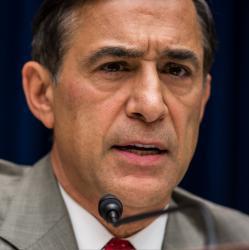
The Obama administration’s story began to shift during a State Department conference call on Oct. 9, when a reporter asked what had “led officials to believe for the first several days that this was prompted by protests against the video.” A department official replied, “That was not our conclusion.” This was a renunciation of the protest story, not the video’s relevance. But nobody noticed. The right-wing mediasphere erupted with cries of vindication that the video had “nothing to do” with the attack. The next day, Rep. Darrell Issa, chairman of the House Oversight and Government Reform Committee, opened a hearing on the controversy by falsely claiming the State Department had denied that “this assault was part of a reaction to a video or the like.” Issa offered his own single-cause theory: “In fact, it was September 11th. … It was that anniversary that caused an organization aligned with al-Qaida to attack and kill our personnel.”
Issa’s theory became Republican gospel. On Oct. 14, Sen. Lindsey Graham, a leading Republican voice on foreign policy, said, “the video had nothing to do with” the attack. On Oct. 18, Charles Krauthammer wrote: “The video? A complete irrelevance. It was a coordinated, sophisticated terror attack, encouraged, if anything, by Osama bin Laden’s successor, giving orders from Pakistan to avenge the death of a Libyan jihadist.” Yesterday on Fox News, Bill Kristol said “no one is quarreling” with the “fact” that “the video had nothing to do with it.”
Indeed, that’s what the Washington press corps was reporting. On Oct. 10, Tapper, citing the State Department conference call, said the video “apparently had absolutely nothing to do with the attack.” On Oct. 13, the New York Daily News reported that the department had said the “attack had nothing to do with the film.” On Oct. 14, a New York Post column said, “even the White House now admits” the video “had nothing to do with” the attack. Bob Woodward declared on Fox News that “We now know [the video] had virtually nothing to do with what happened in Benghazi.” Glenn Kessler, the Washington Post’s fact-checking referee, said the attack “appears unrelated to initial reports of anger at a video.” And a day after moderating the second Obama-Romney debate, CNN’s Candy Crowley said the administration had conceded that the attack “didn’t have anything to do with the tape.”
She was wrong. They were all wrong. The administration hadn’t said that. And now the GOP’s theory, like the CIA’s initial theory, is falling apart. On Oct. 16, David Kirkpatrick of the New York Times reported from Cairo:
To Libyans who witnessed the assault and know the attackers, there is little doubt what occurred: a well-known group of local Islamist militants struck the United States Mission without any warning or protest, and they did it in retaliation for the video. That is what the fighters said at the time, speaking emotionally of their anger at the video without mentioning Al Qaeda, Osama bin Laden or the terrorist strikes of 11 years earlier. And it is an explanation that tracks with their history as members of a local militant group determined to protect Libya from Western influence. … The assailants approvingly recalled a 2006 assault by local Islamists that had destroyed an Italian diplomatic mission in Benghazi over a perceived insult to the prophet. In June the group staged a similar attack against the Tunisian Consulate over a different film. … Other Benghazi militia leaders who know the group say its leaders and ideology are all homegrown. … [T]hey openly proselytize for their brand of puritanical Islam and political vision. They profess no interest in global fights against the West or distant battles aimed at removing American troops from the Arabian Peninsula.
On Friday, the Los Angeles Times confirmed that account. Citing “U.S. officials and witnesses interviewed in Libya,” the Times said the assault “appears to have been an opportunistic attack rather than a long-planned operation. … [A]fter five weeks of investigation, U.S. intelligence agencies say they have found no evidence of Al Qaeda participation.” Last night, the Wall Street Journal reported that the CIA’s “current intelligence assessment still notes there is conflicting evidence about whether there was a protest earlier on the day of the attack.” A U.S. intelligence official adds:
“There isn’t any intelligence that the attackers pre-planned their assault days or weeks in advance. … The bulk of available information supports the early assessment that the attackers launched their assault opportunistically after they learned about the violence at the U.S. Embassy in Cairo.”
What really happened in Benghazi? I don’t know yet. Neither do you. Neither does Romney, Obama, or the CIA. We’re still trying to figure it out. All we know for sure is that the media and officials on both sides drew unwarranted conclusions. As Sen. Marco Rubio, R-Fla., put it yesterday:
One of the narratives that the Obama campaign has laid out is that Bin Laden is dead—they’ve bragged about that forever—and that Al Qaida is in retreat. And you start to wonder: Did they basically say, “Do not allow any story to emerge that counters that narrative”? Is that why, for two weeks, they told us that the Libyan incident in Benghazi was a popular uprising and not a terrorist attack? Because it ran counter to their campaign narrative?
Shouldn’t Republicans ask themselves the same question? Haven’t they argued all along that the key to security is to be feared, not loved? Is that why, for weeks, they told us the Benghazi incident was an al-Qaida attack plotted for the anniversary of 9/11, unrelated to the video-inspired riots across the Muslim world? Because it runs counter to their campaign narrative?
The lesson of Benghazi isn’t that your political enemies got it wrong. The lesson is to worry less about their bias and more about yours.
William Saletan’s latest short takes on the news, via Twitter:
