At festival times, the locals don sandals and cotton indigo happi coats before heaving the neighbourhood deity through the streets on an ornate palanquin. At harvest, they gather to pound rice cakes. Even in non-festival times, there is a sense of community. Traders call out in a sing-song voice, enticing customers into their tiny shops to buy fresh fish, homemade tofu, miso or traditional sweets. Yet this is not some out-of-the-way village or coastal town. This is a fairly typical residential street in Tokyo, the world’s biggest city – a megacity, no less, with a population of some 36m people.
The character of cities – and their larger cousins the megacities – is being rapidly redefined. We can no longer look at cities primarily through a European or North American lens. The great experiment in urbanisation that was played out in the advanced economies in the 19th and 20th centuries has shifted to the developing world, increasingly to Asia.
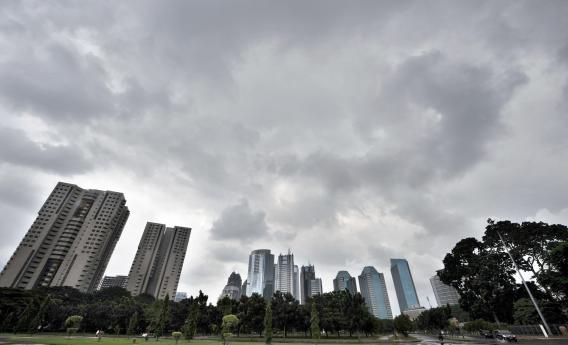
The biggest Asian cities, from Beijing to Jakarta and from Mumbai to Manila, have an entirely different feel from Tokyo. Most are poorer, grimier and lacking in Tokyo’s stupendous public transport. But they share with the Japanese capital, and some of the great conurbations of other continents, such as Lagos or São Paulo, a role in reshaping the definition of what a city means.
“Cities are simply no longer recognisable,” says David d’Heilly, who is writing a book on Tokyo as megacity. “They used to be the populated areas around religious institutions or seats of political power. These days they’re whatever an infrastructure can support.”
Many of those rushing from the countryside – at the rate of 45m people a year in Asia alone – are drawn to megacities, usually defined as those with more than 10m people. Edward Glaeser, an economics professor at Harvard, calls them “cities on steroids”.
The idea of a megacity derives from “megalopolis”, a pejorative term coined in 1918 by Oswald Spengler, the German historian. He was describing cities that had grown too large and were edging towards decline. Jean Gottmann, a French geographer, used the term more positively in the 1950s to refer to the metropolitan corridor along America’s eastern seaboard. Now, the concept has changed again to mean massive agglomerations, mostly in the developing world.
In truth, more of the world’s population is moving to second-tier cities than to the megacities. But huge conurbations have a symbolic potency. For some, they represent a brave new world in which Chinese, Indians, Brazilians and others in the developing world are clambering from poverty. For others, the megacity is nothing less than a nightmare.
The urban shift of humanity, whose number topped 7bn in October, is inexorable. In 2008, for the first time in human history, more people were living in cities than in the countryside. By this measure, Asia, where only 40 per cent of people are urban, is behind. Much of Asia’s city-building lies ahead.
In 1975, according to National Geographic, there were just three megacities. One was New York, commercial capital of the world’s greatest economic power. Another was Mexico City, a byword for the degradation of the developing world, where people crowded into filthy slums despoiled by pollution, violence and disease. The third was Tokyo, a city that had been one of the biggest in the world, with a population of 1m, at the end of the 18th century, when it was called Edo. Tokyo’s population exploded after the war as Japan surged towards western living standards. It became a new kind of city, neither western nor poor – the New York of Asia.
Thirty-five years later, those three cities have been joined by perhaps 20 new megacities. Definitions are hazy and controversial. Tokyo’s 23 wards are home to 12m people. But the greater Tokyo conglomeration, which spills into Kawasaki and Yokohama, comprises roughly 36m souls. Population sizes should not be taken too literally. Chongqing in western China officially has 30m people partly because farmers in surrounding areas are classified as belonging to the city.
McKinsey counts one megacity in Europe (London), three in Africa (Kinshasa, Lagos and Cairo), and five in the Americas (São Paulo, Mexico City, New York, Los Angeles and Buenos Aires). That leaves 11 in Asia, seven of which (Tokyo, Mumbai, Shanghai, Beijing, Delhi, Kolkata and Dhaka) occupy the top seven global spots.
Megacities are not easy to count. They are even harder to classify. Take Shanghai and Mumbai, the commercial capitals of China and India respectively. If you ignore the pollution and don’t stray too far off the main thoroughfares, Shanghai might remind you of New York. Indeed, by some measures it has surpassed that great American city. In 1980, Shanghai had just 121 buildings over eight storeys tall, according to D’Heilly. By 2005, it had more than 10,000. Shanghai boasts 91 skyscrapers more than 200m tall, trumping New York’s 82. Since 1995, it has built the world’s longest metro system, and plans to double it again by 2020.
Compare Shanghai – planned, vertical and (sometimes) gleaming – with Mumbai, unplanned, low-rise and mostly filthy. Still, India’s “Maximum City”, the title of a thrilling portrayal by Suketu Mehta, somehow manages to retain its glamour. For millions of Indians it offers the hope of a better life and escape from the drudgery of the countryside. Building regulations mean Mumbai has few skyscrapers. Rather than living in high-rise towers, many crowd into tiny spaces in slums like Dharavi.
Mumbai has no metro system, though one is being built. Its railway, which transports the equivalent of the population of Israel every day, is so hazardous that hundreds are killed each year. Yet the city somehow functions. To take just one example, its tiffin-carryingdabbawalas supply millions of lunches – for Muslims, Hindus, vegetarians and meat-eaters – in a feat of supply-chain management that has consultants swooning.
Gil-Hong Kim, an infrastructure expert at the Asian Development Bank, says that, to be successful, cities need leaders capable of implementing a vision. In 1970, nearly one-third of people in Seoul lived in squatter settlements. Thanks to careful land-use planning – supplemented by brutal use of the bulldozer – the city has been transformed. Now with a population of 24.5m, it is a mostly pleasant and prosperous city with the world’s third-biggest metro system by passenger numbers.
That’s the exception. The way most cities are run has not caught up with reality. According to McKinsey, more than one-fifth of the world’s population live in just 600 cities, which together generate half of global output. Yet many of these have little sway over their own budgets, planning or policy. Fauzi Bowo, governor of Jakarta, complained at an FT/World Bank conference in Singapore that he had to beg the national government for funds. “By 2025, 60 per cent of Indonesians will live in cities, but how can we cope if we are not given adequate authority and sources of funding?”
Many cities in Asia have little ability to tax their inhabitants or to charge them for water or electricity, let alone to provide the sewerage, roads and public transport that might improve life. We still think in terms of the nation state. But the world’s people have moved to cities, many of them administratively powerless.
Clearly, there are huge problems associated with living an ever-more urban existence, not least the environmental impact. A middle-class Shanghainese consumes far more resources and generates far more greenhouse gases than a farmer in Anhui province. Yet, as Glaeser argues forcefully in Triumph of the City, cities are at the apex of human endeavour. High-density cities are creative, thrilling and less environmentally destructive than sprawling car-based suburbs typical of America. Cities are passports from poverty. They attract poor people, rather than creating them. They are where humans are at their most artistically and technologically creative.
Whether we like it or not, it is no longer possible to keep the bulk of humanity down on the farm. By 2050, three-quarters of the world’s population will be urban. That means more cities – and more megacities. “These megacities are a big part of humanity’s future and the prospect should be both exhilarating and terrifying,” says Glaeser. The examples of Tokyo, Seoul and Shanghai show that megacities don’t have to be monstrosities. For many of us, the megacity is our fate. The goal of humanity should be to manage that fate, not succumb to it.
This article originally appeared in Financial Times. Click here to read more coverage from the Weekend FT.
