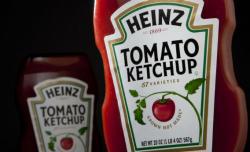
Fast food is America’s signature export, and one of its most pervasive: Every day another few outlets open in Europe or Asia, spreading the distinctively American diet to the world. It’s ironic, then, that hamburgers, french fries, and ketchup are not even originally ours, a fact that is clear from what we call them. The large German contribution to American cuisine is obvious in words like hamburger, frankfurter, and pretzel, while french fries make their Franco-Belgian origins plain. And, of course, ketchup is Chinese.
Yes, dear reader, the word ketchup originally meant “fish sauce” in a dialect of Fujian province, the humid coastal region that also gave us the word “tea” (from Fujianese te). As it happens, Fujianese immigration to the United States has increased in recent years, so you can now sample Fujianese dishes in Chinatowns up and down the East Coast, paired with the homemade red rice wine that is a specialty of the province. The history of this red rice wine is intertwined with that of ketchup—but while the wine has stayed largely the same over the centuries, ketchup has undergone quite a transformation.
The story begins more than 500 years ago, when this province on the South China Sea was the bustling center of seafaring China. Fujianese-built ships sailed as far as Persia and Madagascar and took Chinese seamen and settlers to ports throughout Southeast Asia. Down along the Mekong River, Khmer and Vietnamese fishermen introduced them to their fish sauce, a pungent liquid with a beautiful caramel color that they made (and still make) out of salted and fermented anchovies. This fish sauce is now called nuoc mam in Vietnamese or nam pla in Thai, but the Chinese seamen called it ke-tchup, “preserved-fish sauce” in Hokkien—the language of southern Fujian and Taiwan. (Of course, Hokkien isn’t written with the Roman alphabet; ke-tchup is one of several old-fashioned Westernized transcriptions, like catsup and katchup. The word has died out of modern Hokkien, but the syllable tchup—pronounced zhi in Mandarin—still means “sauce” in many Chinese dialects.)
Fujianese settlers took ke-tchup with them to Indonesia, Malaysia, and the Philippines; the word was even adopted by Indonesians (although today in Bahasa Indonesia, the language of Indonesia, kecap just means “sauce”). Fujianese settlers also brought along fermented red rice, the seasoning their chefs had long used to flavor stews and braises. The immigrants began to turn this red rice into arrack, an early ancestor of rum, by distilling the fermented rice together with molasses and palm wine. Chinese factories were established on Java and Sumatra to make both fish sauce and arrack.
When Dutch and British merchants came to Southeast Asia around 1600 seeking spices, textiles, and porcelain, they quickly began to buy immense quantities of arrack from the Chinese. “Batavia arrack” became the main ingredient in punch, the world’s first cocktail. Hundreds of thousands of gallons of arrack were exported annually. This may not come as a surprise—after all, navies full of British and Dutch sailors needed something to drink, and rum had not yet been invented. What may be surprising—given fish sauce’s heady scent and England’s reputation for bland food—is that while buying all these barrels of arrack from Chinese merchants in Indonesia, British sailors also acquired a taste for ke-tchup. By the turn of the 18th century, fish sauce and arrack had become as profitable for British merchants as they were for Chinese traders.
In 1703, British merchant Charles Lockyer traveled to Indonesia, Malaysia, Vietnam, China, and India. His An Account of the Trade in India, a kind of vade mecum for would-be global capitalists, explains the vast sums of money to be made in Asia, and how to get rich by bargaining with the Chinese and other foreigners. Here is Lockyer’s advice on buying ketchup or soy sauce in China or Tonkin (“Tonqueen”, i.e., northern Vietnam):
Soy comes in Tubs from Jappan, and the best Ketchup from Tonqueen; yet good of both sorts, are made and sold very cheap in China. … I know not a more profitable Commodity.
The great expense of this Asian import soon led to recipes in British and then American cookbooks for cooks attempting to make their own ketchup. Here’s one from a 1742 London cookbook in which the fish sauce has already taken on a very British flavor, with “eschallots” (shallots) and mushrooms:
To Make KATCH-UP that will keep good Twenty Years.
Take a Gallon of strong stale Beer, one Pound of Anchovies wash’d and clean’d from the Guts, half an Ounce of Mace, half an Ounce of Cloves, a quarter of an Ounce of Pepper, three large Races of Ginger, one Pound of Eschallots, and one Quart of flap Mushrooms well rubb’d and pick’d; boil all these over a slow Fire till it is half wasted, and strain it thro’ a Flannel Bag; let it stand till it is quite cold, then bottle and stop it very close …
The mushrooms that played a supporting role in this early recipe soon became a main ingredient, and from 1750 to 1850 the word ketchup began to mean any number of thin dark sauces made of mushrooms or even walnuts. Jane Austen’s family seemed to prefer this new walnut ketchup, and the household book kept by Jane’s friend Martha Lloyd while she lived with Jane’s family in Chawton tells us they made it by pounding green walnuts with salt and then boiling the mash with vinegar, cloves, mace, ginger, nutmeg, pepper, horseradish, and shallots.
It wasn’t until the 19th century that people first began to add tomato to ketchups, probably first in Britain. This early recipe from 1817 still has the anchovies that betray its fish-sauce ancestry:
Tomata Catsup (1817)
Gather a gallon of fine, red, and full ripe tomatas; mash them with one pound of salt; let them rest for three days, press off the juice, and to each quart add a quarter of a pound of anchovies, two ounces of shallots, and an ounce of ground black pepper; boil up together for half an hour, strain through a sieve, and put to it the following spices; a quarter of an ounce of mace, the same of allspice and ginger, half an ounce of nutmeg, a drachm of coriander seed, and half a drachm of cochineal; pound all together; let them simmer gently for twenty minutes, and strain through a bag: when cold, bottle it, adding to each bottle a wineglass of brandy. It will keep for seven years.
By the mid-1850s, the anchovies had been dropped, and it was only in 1890 that the need for better preservation (and the American sweet tooth) led American commercial ketchup manufacturers like Heinz to greatly increase the sugar in ketchup, leading to our modern sweet and sour formula.
The Chinese origins of our national sauce aren’t just a fun bit of culinary trivia—ketchup’s history offers a new way to look at global economic history. If you subscribe to a traditional Western model of Asian economics, China turned inward in 1450 during the Ming dynasty and became isolated and economically irrelevant, leading to stagnation and a low standard of living until the West finally dragged Asia into the world economy in the 19th and early 20th century.
But the vast production and trade of ke-tchup (not to mention arrack and less delicious goods like textiles and porcelain) well into the 18th century tell a different tale. Recent scholars have shown that the Chinese government’s bans on private sea trade were repeatedly rescinded, and in any case were ignored by Hokkien merchants and pirates, who continued to sail and trade illegally on a massive scale. In fact, by the time British sailors brought ketchup back to England, China was the richest nation in the world by any measure—including standard of living, life span, per-capita income, military strength—and produced the bulk of the whole world’s GNP. China’s control of intra-Asia trade together with its superior manufacturing technology (in textiles, clothing, ceramics, and of course fermentation) meant that China dominated the world economy until the industrial revolution.
These facts explain why the British and Dutch were so eager to get to Asia: Most of the world’s trade took place only there. But all Europe had to offer in exchange for Asia’s considerable luxury goods were gold and silver from American colonial mines. As Charles Mann argues in 1493, it was thus the desire for Asian exports that drove Europe’s intense phase of exploration and colonization in the New World. The encounter between Western appetites and Eastern products created our modern “world-spanning interconnected civilizations,” to borrow Mann’s turn of phrase.
The story of ketchup—from the fermented fish sauces of China and Southeast Asia to the sweet chutneys of England and America—is, after all, a story of globalization and of centuries of economic domination by a world superpower. But the superpower isn’t America, and the century isn’t ours. Think of those little plastic packets under the seat of your car as a reminder of China’s domination of the global world economy for most of the last millennium.
