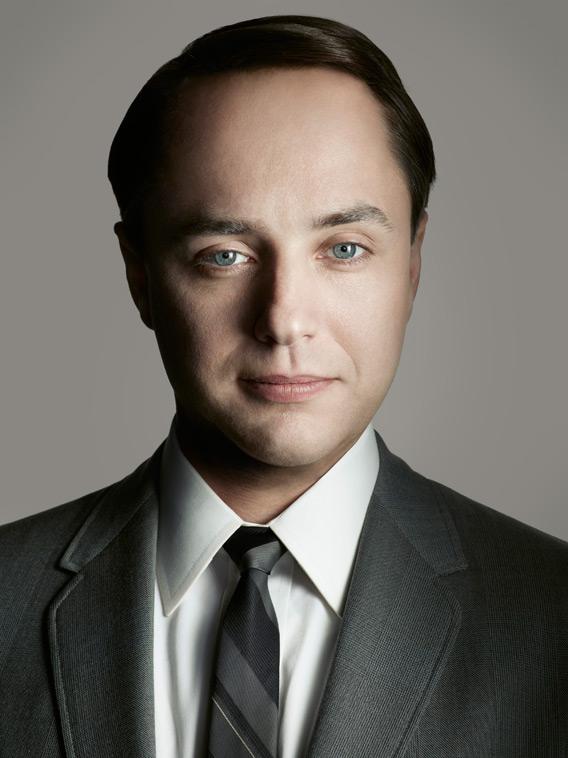
Pete Campbell dominated “Signal 30,” the fifth episode in Mad Men’s fifth season. Over the course of the hour, Pete attempted to seduce a teenage girl in his drivers’ ed class, hosted a dinner party, failed to fix a plumbing problem, slept with a prostitute, and lost a fistfight.
Slate spoke with actor Vincent Kartheiser by telephone shortly after the episode aired.
Slate: Do you like Pete Campbell at this point?
Vincent Kartheiser: I can sympathize and empathize with some of the things he faces and some of the obstacles he has created for himself.
Slate: Is Joan right that everyone wants to punch him in the face? Is Lane right that he has become a monster?
Kartheiser: I think Joan’s right. A personality type like Pete sometimes has to push people’s buttons, and through the seasons he has done that. I’m not sure if Lane’s right about him being a “grimy little pimp” or that he deserves all the blame for that situation. Pete’s upset at all of them for laughing at him. He felt betrayed.
Slate: He’s a man of ambition, but he seems to get more unhappy the more he achieves. He’s achieved many of his goals—Trudy had the baby, he got a bigger office, he’s dominating Roger—but he seems to get crabbier by the week. Do you understand why he’s so unhappy?
Kartheiser: With success comes a level of sadness. You think, “I’ll reach this goal, and then I’ll feel a sense of completeness, of wholeness. I’ll feel that I have accomplished something. I will see myself as a worthy man.” And it doesn’t really exist.
He also has the weight of this entire agency on his shoulders, and he doesn’t feel like he’s getting any respect for that. I think that a bigger man would handle that better. Pete becomes pouty and kind of aggressive. He tries to show off and make people respect him, and that’s not possible.
Slate: Do you think there’s any hope for Pete? Is he just doomed to being a lonely man and becoming more and more unhappy the older he gets?
Kartheiser: There are times in your life where you realize the distance between who you are and who you thought of yourself as. Everyone’s inevitably going to face periods of their life when they feel hopeless and worthless. I think there are redeeming qualities to Pete. I don’t think he’s doomed.
Slate: Pete always seems to feel very self-conscious about his size—he’s not manly in the same way as Don—and he’s conscious of getting older. You’re the same size; you’re the same age. I know that you’re an actor playing a role, but do the character’s feelings ever sow seeds of doubt and discontent in your head?
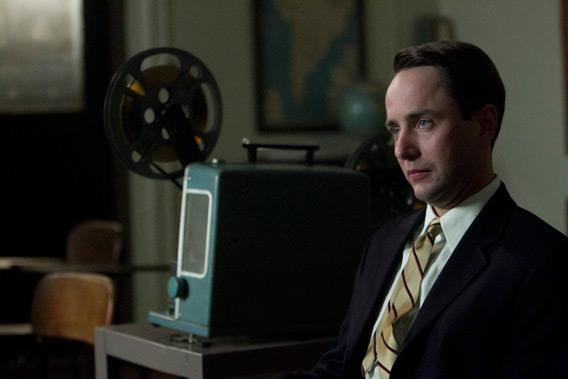
Jordin Althaus/AMC
Kartheiser: I don’t think the character does that to me, but I think that as a human being, I can look at the scene with the young girl and the handsome young man, and I can look directly at my life and think, “That happens to me all the time.” I’ve come to a point now that when I’m in a room with 22-year-old girls, I think about them like my daughter or my younger sister. But I remember very clearly realizing, “Oh, wow, I’m not even part of this person’s sexual thoughts!”
I have that same reaction. I’m older and fatter and uglier. I’m not 21. I am self-conscious of my body. I am self-conscious of my age. I am all of those things as a human being. Not just as a person who plays Pete, but as a dude.
Slate: The episode tonight began with a gory driver’s ed film. It made me scared that something horrible was going to happen to Pete. As an actor with this fantastic part on this awesome show, do you share the anxiety of something happening to Pete?
Kartheiser: Whenever you have something good, you’re scared of losing it. You do have anxiety, but if I’m going to die on a show, or if I’m going to get kicked off a show, this is the one I want to do it on. I trust Matt. I’m happy to do whatever he needs me to do to tell the best story. And if that means me not being on it anymore—if that brings to a head a point that he’s trying to make—then I’m happy to be the arrow that he has to fling away.
Slate: What’s the most difficult aspect of being on Mad Men?
Kartheiser: Having to explain the more amazing points of Mad Men. I’m just an actor. I’m not nearly as smart as the writers of this show. I’m only speaking for myself—I think some of the other actors get it more than me—but I’ll run into people with brilliant minds who start asking me questions about the show, and I’m like, “Look, whatever you’ve come up with is definitely better than anything I’ve read into it.” I can tell you what Matt Weiner says. I can tell you what Jon Hamm thinks. But I’m just a puppet. I love my character, and Matt writes great shit for us, and he makes sure we understand it. We work hard on it, and I’m proud of that, but the hardest part is that it’s a lot of really highbrow stuff, and sometimes I’m just a lowbrow dude.
This interview has been edited and condensed.
